


Post-polymerization Modification Reactions of Poly(glycidyl methacrylate) (PGMA)
- 2026-08-04
- 178
- Weicheng Advanced Material (Shandong) Co., Ltd.
AI-assisted content. please verify.
Post-polymerization Modification Reactions of Poly(glycidyl methacrylate)s
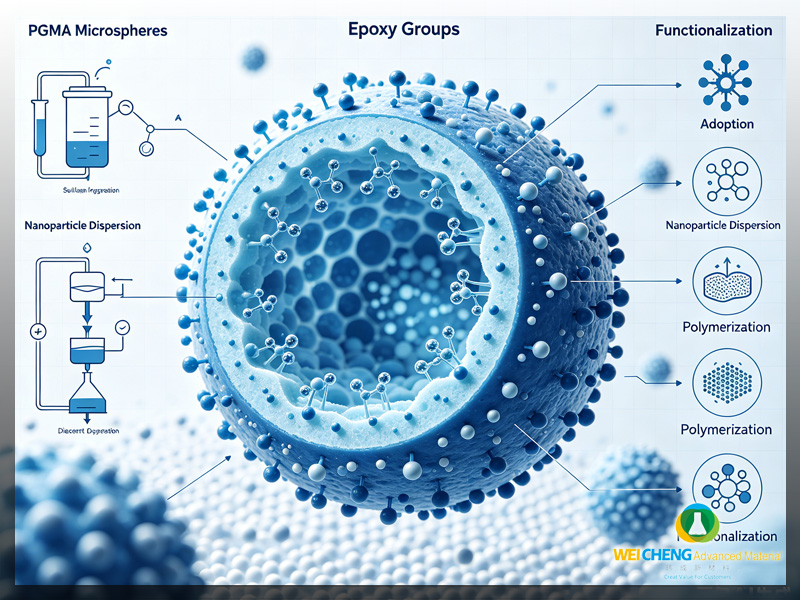
Post-polymerization modification of Poly(glycidyl methacrylate) (PGMA) relies on nucleophilic ring-opening reactions of pendant epoxide groups on PGMA chains. This versatile synthetic strategy enables grafting diverse functional moieties onto a ready-made polymer backbone without breaking the main polymer chain. Therefore, PGMA serves as an outstanding reactive molecular scaffold for designing tailored functional polymeric materials.
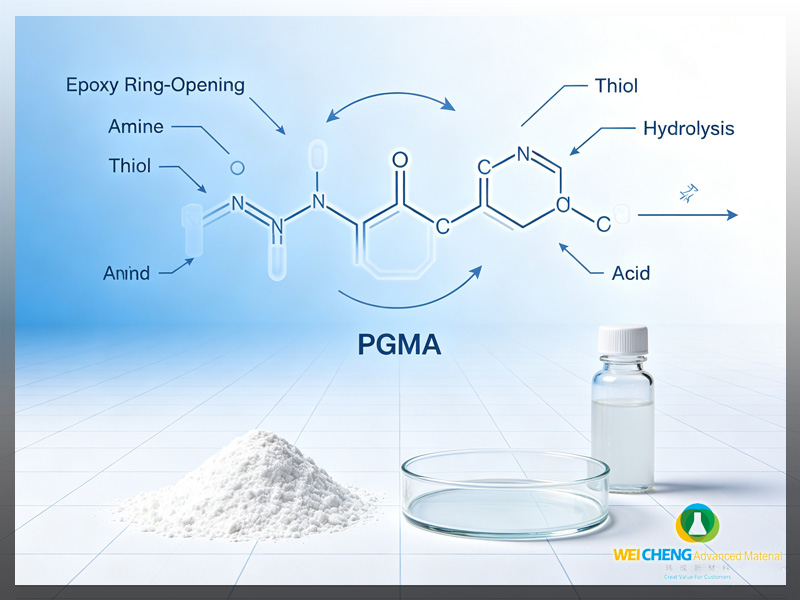
Main Ring-Opening Modification Reactions of PGMA Epoxy Groups
The core modification pathways include five classic nucleophilic ring-opening reactions:
Amine–epoxy reaction
Thiol–epoxy reaction
Azide–epoxy reaction
Carboxylic acid–epoxy reaction (acid–epoxy)
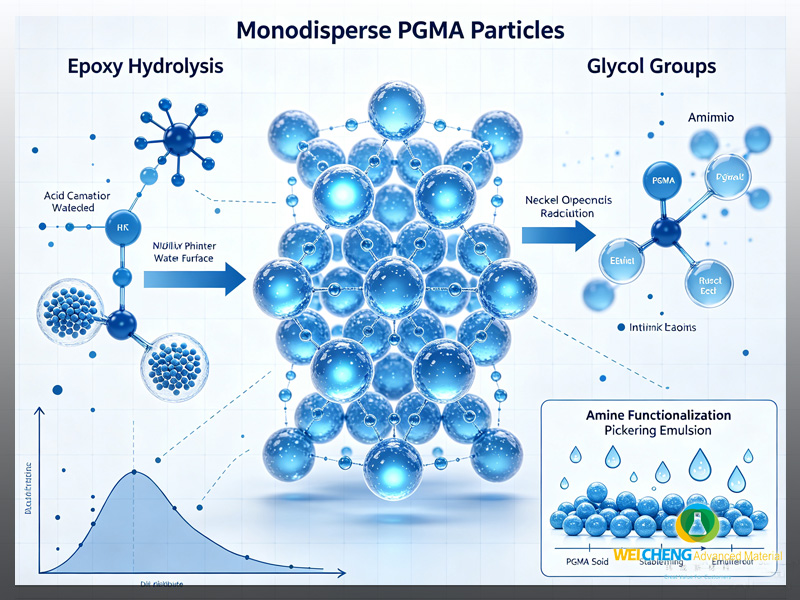
Epoxy hydrolysis reaction
After the initial oxirane ring-opening, hydroxyl groups are generated along the side chains. These newly formed hydroxyl groups can participate in further sequential chemical transformations. This enables multi-step post-modification to produce multi-functionalized PGMA derivatives, constructing polymers carrying two or more different functional groups simultaneously.
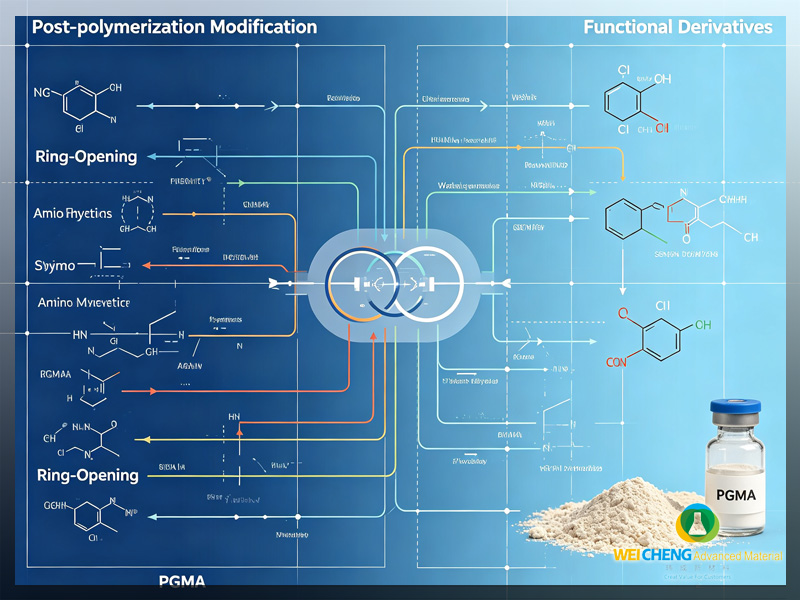
Why PGMA Is an Ideal Reactive Scaffold in Polymer Chemistry
PGMA stands out among functional acrylic polymers thanks to multiple inherent advantages:
✅ Commercially accessible glycidyl methacrylate (GMA) monomer for large-scale synthesis
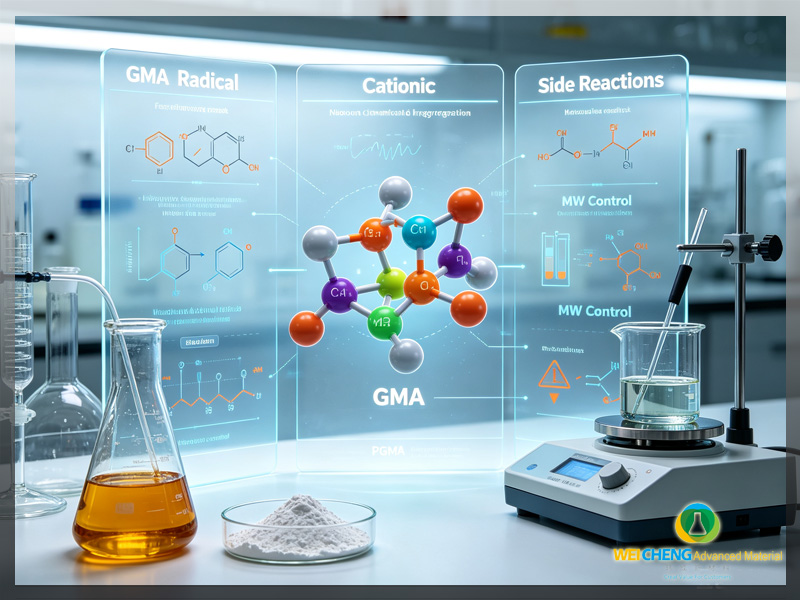
✅ Feasible polymerization via conventional free radical polymerization and controlled radical polymerization (ATRP, RAFT)
✅ Long shelf stability of synthesized PGMA raw polymer
✅ Highly flexible post-polymerization functionalization system
✅ Mild reaction conditions for epoxy ring-opening, low risk of backbone degradation
Through these modification chemistries, basic PGMA can be converted into countless customized functional polymers for drug delivery, biosensing, antimicrobial materials, coatings, polymer compatibilizers and separation media.
Technical Value & Industrial Enlightenment
Laboratory research widely utilizes PGMA post-modification to develop advanced functional materials. For industrial manufacturers:
Amine modified PGMA: Improve adhesion, prepare adsorption resins and biosensor carriers
Acid-epoxy modified PGMA: Build crosslinkable resin systems for coatings and inks
Thiol-epoxy modified PGMA: Prepare low-surface-energy coatings, anti-fouling materials
Weicheng Advanced Material supplies customizable PGMA (Mw 40,000–80,000) with controllable epoxy content, low residual monomer, suitable as base polymer for subsequent post-polymerization modification.
Weicheng Advanced Material PGMA Advantages
✅ Adjustable molecular weight and epoxy equivalent
✅ Low residual GMA monomer, minimizing side reactions during modification
✅ Stable batch consistency for continuous lab & pilot research
✅ Low-yellowing electronic grade available
✅ Full set of COA, TDS, MSDS export documents
Contact us to obtain PGMA samples for your post-polymerization modification research.

 Home
Home Products
 News
News Call
Call