


A Review on Engineering of Poly(Glycidyl Methacrylate) Microspheres
- 2026-08-04
- 124
- Weicheng Advanced Material (Shandong) Co., Ltd.
AI-assisted content. please verify.
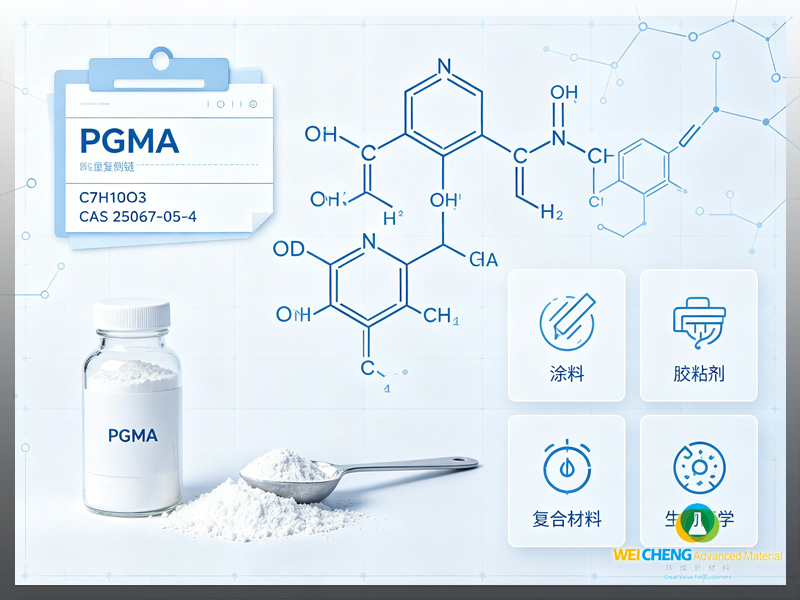
Poly(glycidyl methacrylate) (PGMA) microspheres are highly valuable colloidal micro‑particles with unique structural characteristics. Benefiting from abundant reactive epoxy groups on the surface, PGMA microspheres possess outstanding advantages including facile surface functionalization, good dispersibility, tunable adsorption capacity and controllable swelling performance. They serve as ideal precursors for constructing a wide range of novel advanced functional materials.
In recent decade, PGMA‑based microsphere materials have attracted tremendous research interest worldwide. Researchers focus on material design, fabrication and characterization, aiming to obtain customized performance and solve practical technical challenges in multiple fields.
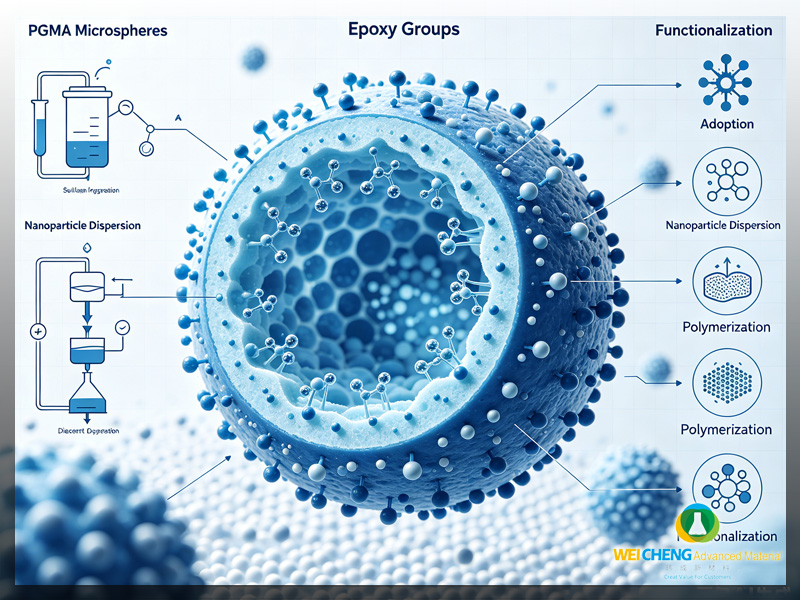
Key Advantage: Promoting Homogeneous Dispersion of Nanoparticles
Introducing inorganic or organic nanoparticles into polymer matrix is an important route to enhance material performance. However, nanoparticles inherently tend to agglomerate, which makes uniform dispersion difficult in most polymer systems and deteriorates final material properties.
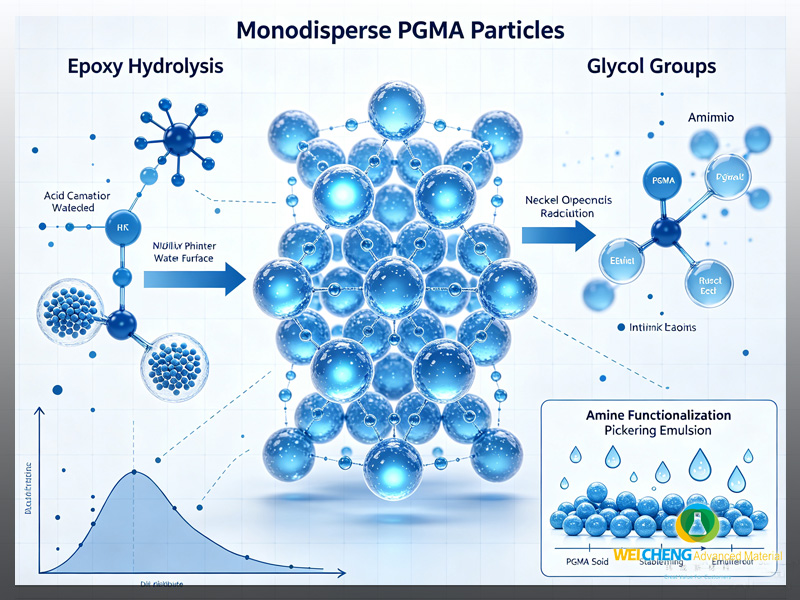
In contrast, PGMA microspheres exhibit prominent grafting capacity. Surface epoxy groups can covalently anchor nanoparticles, effectively suppress particle aggregation, and achieve well‑distributed nanoparticle within PGMA microsphere matrix. This characteristic lays solid foundation for preparing high‑performance PGMA‑nanoparticle composite microspheres.
Main Preparation Strategies for PGMA Microspheres
Multiple synthetic approaches are available to fabricate PGMA microspheres with targeted particle size, morphology and pore structure:
Suspension polymerization: Produce large‑size microspheres, widely used for adsorption carriers and solid‑phase extraction substrates.
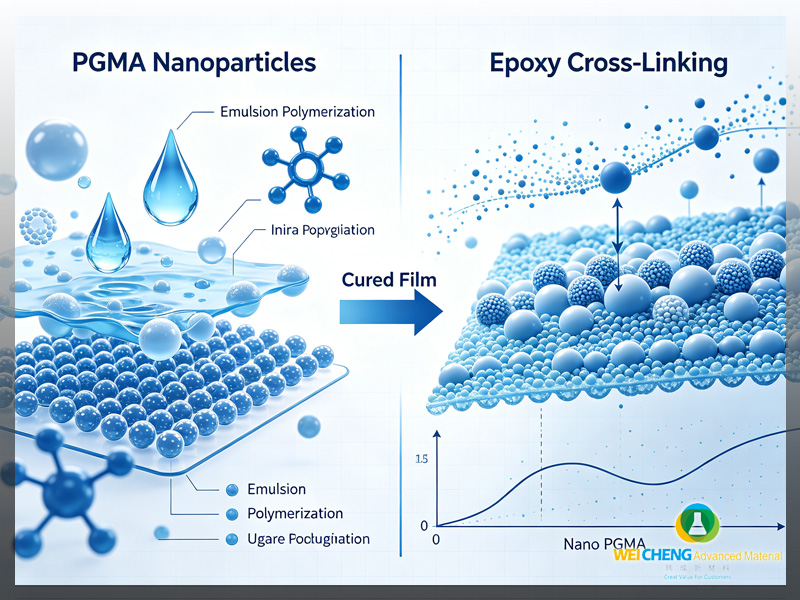
Emulsion polymerization: Obtain sub‑micron or nano‑scale PGMA colloidal microspheres for biomedical and biosensing applications.
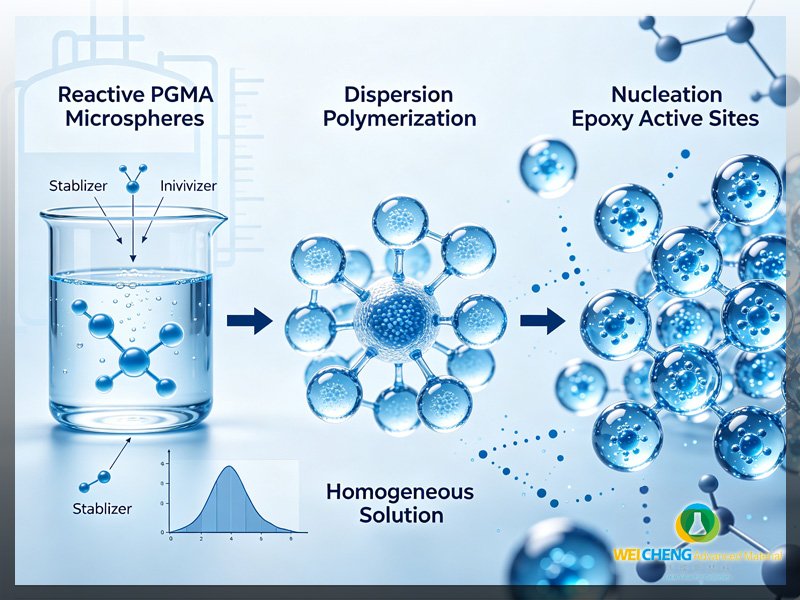
Dispersion polymerization: Prepare monodisperse PGMA microspheres with narrow particle‑size distribution.
Seed‑growing polymerization: Realize precise control over particle diameter and surface morphology for high‑end chromatographic packing materials.
Adjustment of monomer concentration, stabilizer type, initiator dosage, solvent system and reaction temperature can tailor particle size, specific surface area, pore structure and epoxy group density of PGMA microspheres.
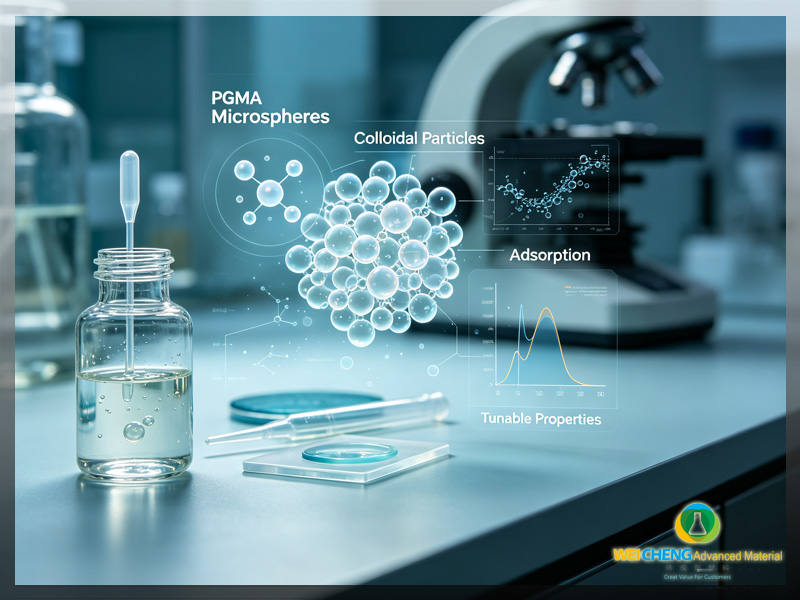
Characteristic Features of PGMA Microspheres
Easy surface functionalization: Surface pendant epoxy groups can undergo nucleophilic ring‑opening reaction with amines, thiols, carboxylic acids, enabling grafting of amino, carboxyl and other functional moieties.
Excellent dispersion performance: Good colloidal stability in aqueous and organic systems under suitable conditions.
Tunable swelling property: Swelling behavior can be adjusted by cross‑linking degree for different solvent environments.
Adsorption capacity: Modified PGMA microspheres can realize selective adsorption towards metal ions, biomolecules and organic pollutants.
Composite feasibility: Support in‑situ loading or post‑grafting of metal‑oxide, carbon‑based and other nanoparticles to build composite microspheres.
Research Value & Application Prospects
PGMA microspheres and their composite derivatives have broad application directions:
Bioseparation and biosensing: enzyme/antibody immobilization carriers, affinity chromatography packing
Environmental treatment: adsorbents for heavy‑metal ions and organic contaminants
Biomedical field: drug delivery microcarriers
Advanced composite materials: functional colloidal fillers
This review summarizes preparation routes and intrinsic properties of PGMA microspheres, evaluates critical influencing factors for developing PGMA‑based functional materials, and provides references and innovative ideas for follow‑up experimental design.
Industrial Reference
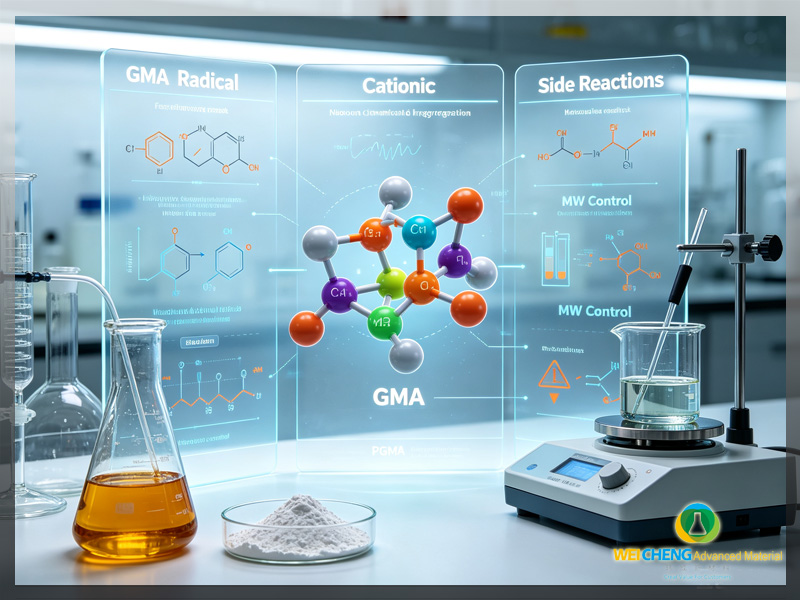
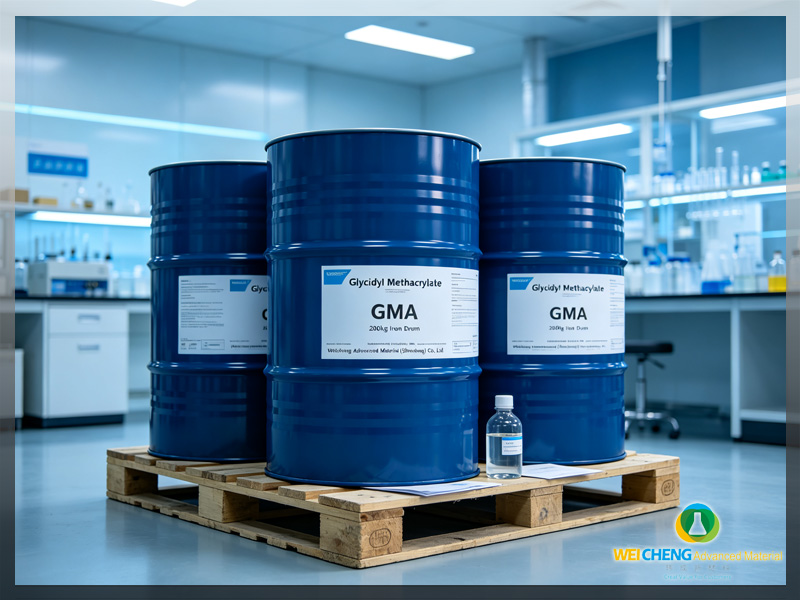
High‑purity GMA monomer is the basic raw material for manufacturing high‑quality PGMA microspheres. Impurities in monomers will affect particle forming performance, monodispersity and surface epoxy content.Weicheng Advanced Material provides 99.9% purity GMA monomer with annual output of 6000 tons, supporting lab exploration and pilot‑scale production of PGMA microspheres.
Weicheng Advanced Material Advantages
✅ GMA monomer ≥99.9% purity by continuous rectification
✅ Low inhibitor grade optional for microsphere polymerization research
✅ Stable batch quality, low impurity, less interference to particle formation
✅ Full set of COA, TDS, MSDS for export
✅ Technical consultation support for polymer microsphere synthesis
Contact us for GMA samples for your PGMA microsphere research.

 Home
Home Products
 News
News Call
Call