


Synthesis and Curing of Poly(glycidyl methacrylate) (PGMA) Nanoparticles
- 2026-08-04
- 146
- Weicheng Advanced Material (Shandong) Co., Ltd.
AI-assisted content. please verify.
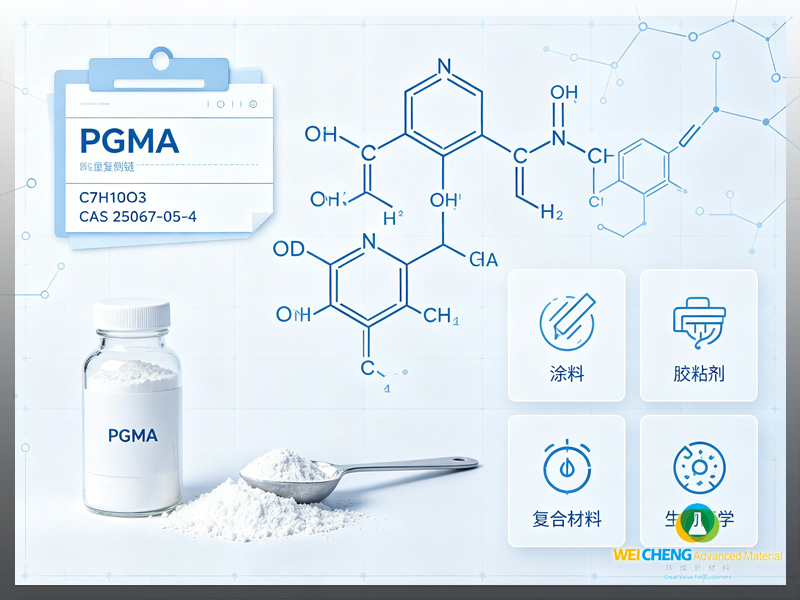
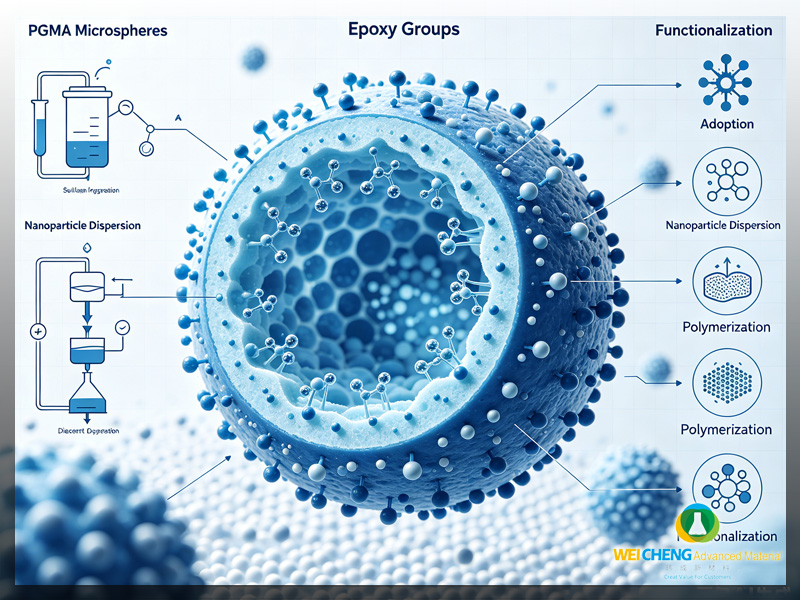
PGMA nanoparticles are nano‑scale colloidal particles built from poly(glycidyl methacrylate). Benefiting from high‑density pendant epoxy groups distributed on particle surface and interior, PGMA nanoparticles combine nanoscale size effect with reactive epoxy curing capability, becoming promising building blocks for high‑performance coatings, nanocomposites and functional films.
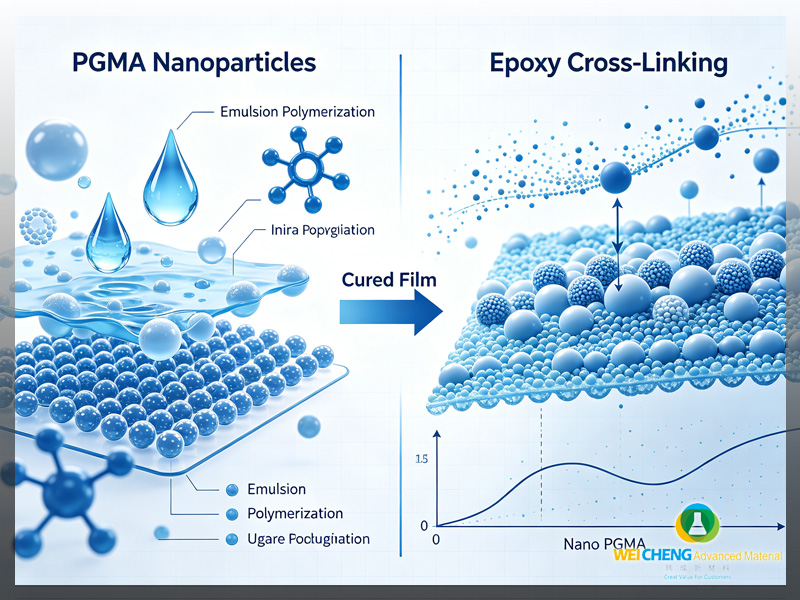
Synthesis Routes of PGMA Nanoparticles
Common synthetic strategies to obtain PGMA nanoparticles mainly include emulsion polymerization, miniemulsion polymerization and nanoprecipitation. Each method delivers distinct particle size, particle‑size distribution and surface epoxy density.
Emulsion PolymerizationWidely used aqueous‑phase synthetic route. GMA monomer polymerizes in micelles initiated by water‑soluble initiators to form PGMA nanoparticles.
Advantages: Aqueous system, low VOC, easy operation, suitable for mass preparation
Features: Particle size typically ranges from tens to hundreds of nanometers; particle size controlled by surfactant dosage, monomer feeding rate and reaction temperature
Note: Strict temperature control is required to avoid premature epoxy ring‑opening and pre‑crosslinking during synthesis.
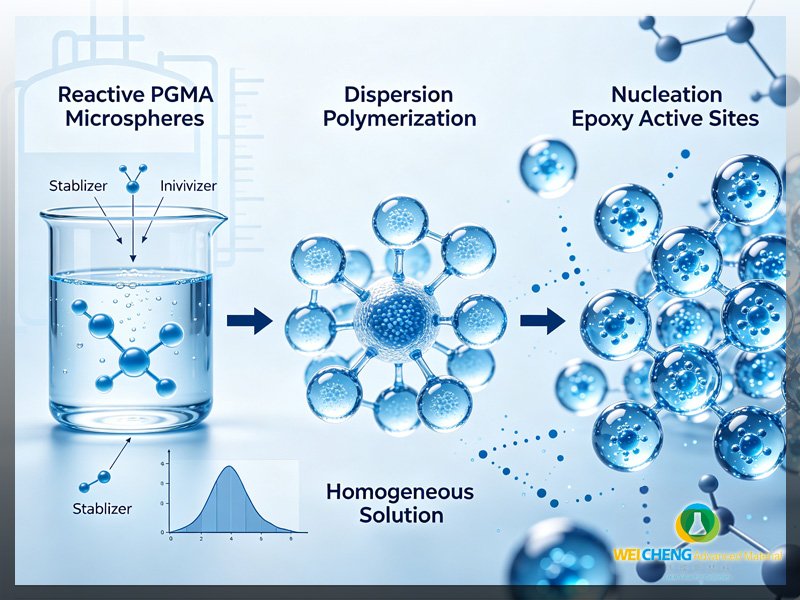
Miniemulsion PolymerizationDroplet‑by‑droplet polymerization of monomer droplets stabilized by co‑stabilizer.
Advantages: Good control over particle dimension; convenient for co‑polymerization with hydrophobic co‑monomers; high encapsulation efficiency for hydrophobic additives
Application: Prepare cross‑linkable composite PGMA nanoparticles loaded with functional components.
NanoprecipitationDissolve pre‑synthesized PGMA polymer in organic solvent, then rapidly diffuse into non‑solvent to self‑assemble into nanoparticles.
Advantages: Simple process, no surfactant residue; preserve original molecular structure of PGMA
Limitation: Batch output is relatively low, mostly for laboratory‑scale research.
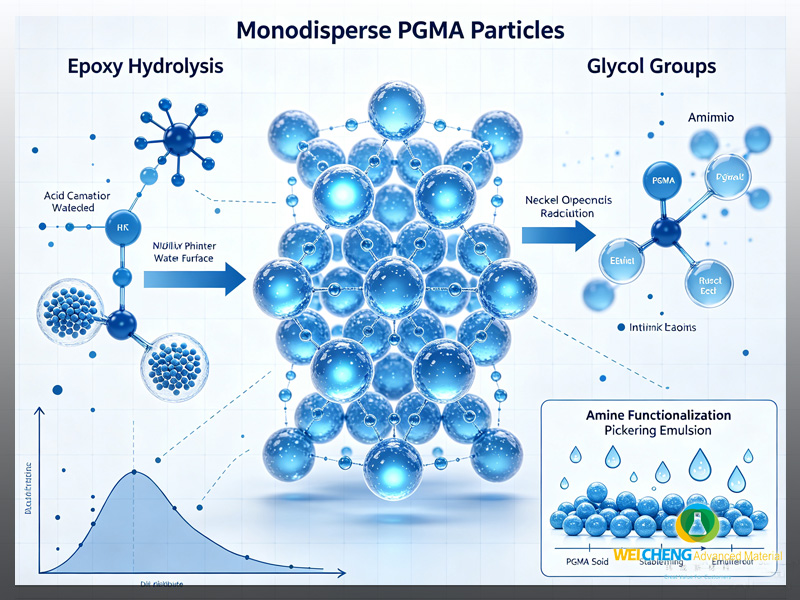
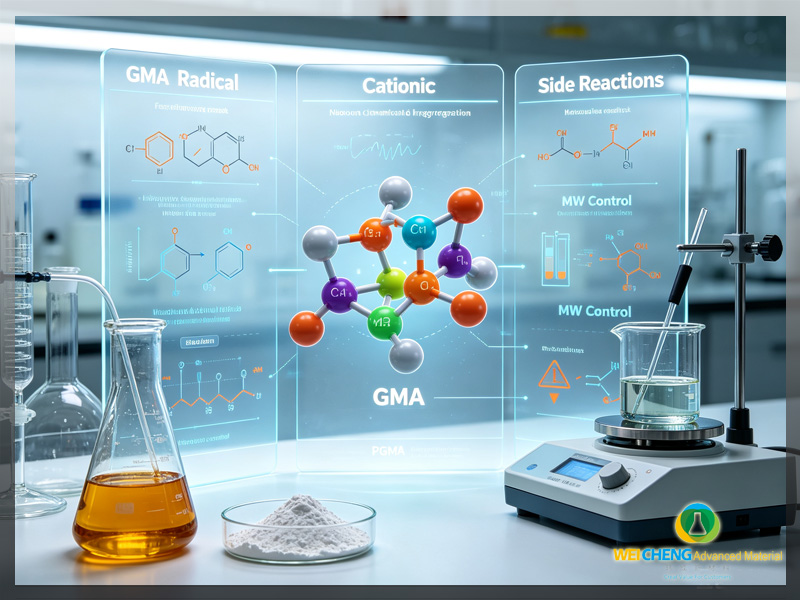
Key point for all synthetic processes: Protect epoxy groups. Excessively high temperature, acid or base contamination will trigger undesired ring‑opening and cause particle agglomeration.
Curing Mechanism of PGMA Nanoparticles
Curing of PGMA nanoparticles relies on chemical reaction of epoxy groups. Curing can be classified into two categories: chemical cross‑linking with curing agents and self‑curing.
1. Curing via curing agents (cross‑linkers)
Epoxy groups react with multi‑functional curing agents to build 3‑dimensional cross‑linked network:
Amine curing agents: Epoxy‑amine ring‑opening reaction, curing under room‑temperature or moderate heating
Carboxyl‑containing curing resins: Epoxy‑carboxylate cross‑linking, widely applied for UV‑dual‑cure coatings and solder‑resist systems
Thiol‑based cross‑linkers: Thiol‑epoxy click reaction, fast curing under mild condition
During curing, nanoparticles fuse and cross‑link with each other. Nano‑scale characteristics are inherited into final film, delivering enhanced hardness, scratch resistance and chemical resistance.
2. Thermal self‑curing
Under high‑temperature condition, intermolecular reaction between epoxy groups or epoxy‑hydroxyl groups (from partial ring‑opening) realizes self‑cross‑linking without extra curing agent.
Drawback: Requires high baking temperature; risk of yellowing; hard to precisely control curing degree.
Influencing Factors for Curing Performance
Epoxy group density of PGMA nanoparticles: Higher epoxy content provides more cross‑linking sites for higher cross‑link density.
Particle size: Smaller nanoparticles own larger specific surface area, accelerating curing reaction rate.
Curing temperature & time: Determine cross‑link extent and final film performance.
Impurity: Acid/base impurities will accelerate epoxy side‑reactions and interfere curing profile.
Main Application Scenarios
Water‑borne high‑performance coatings: Nano‑PGMA improves film compactness, adhesion and corrosion resistance
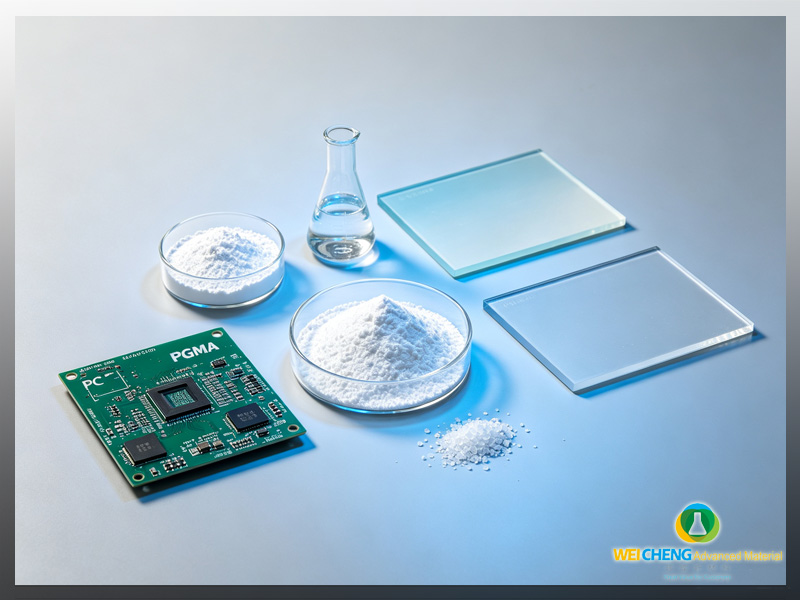
PCB dual‑curable solder‑resist material: Nano‑PGMA contributes fine resolution and cross‑linking density
Nanocomposite reinforcing phase: Enhance interfacial bonding between filler and polymer matrix
Functional nano‑carriers: Cured PGMA nanoparticle network for adsorption and separation
Weicheng Advanced Material Technical Support
High‑purity GMA monomer is critical for preparing high‑quality PGMA nanoparticles. Impurities and excessive inhibitor will interfere nanoparticle formation and subsequent curing behaviour.
✅ High‑purity GMA monomer ≥99.9 %, continuous rectification process
✅ Optional low‑MEHQ grade for nano‑particle synthesis
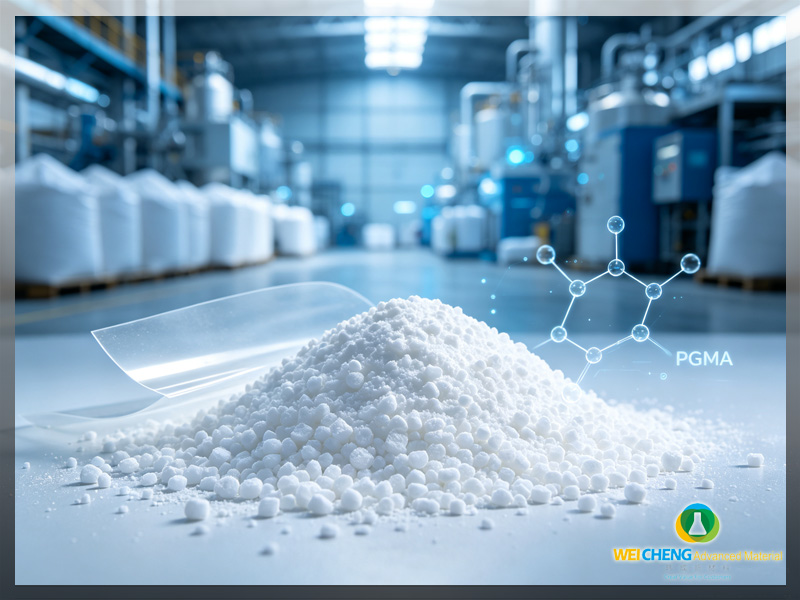
✅ Industrial PGMA raw polymer for nanoprecipitation preparation
✅ Technical consultation for nanoparticle synthesis and curing‑formula development
✅ Complete COA, TDS, MSDS for global export
Contact us for samples for your PGMA nanoparticle synthesis & curing research.

 Home
Home Products
 News
News Call
Call