


PGMA Micro‑Particles: Two‑Stage Dispersion Polymerization, Epoxy Ring‑Opening & Surface Functionalization
- 2026-08-04
- 130
- Weicheng Advanced Material (Shandong) Co., Ltd.
AI-assisted content. please verify.
PGMA Micro‑Particles: Synthesis, Surface Modification & Custom Functional Options
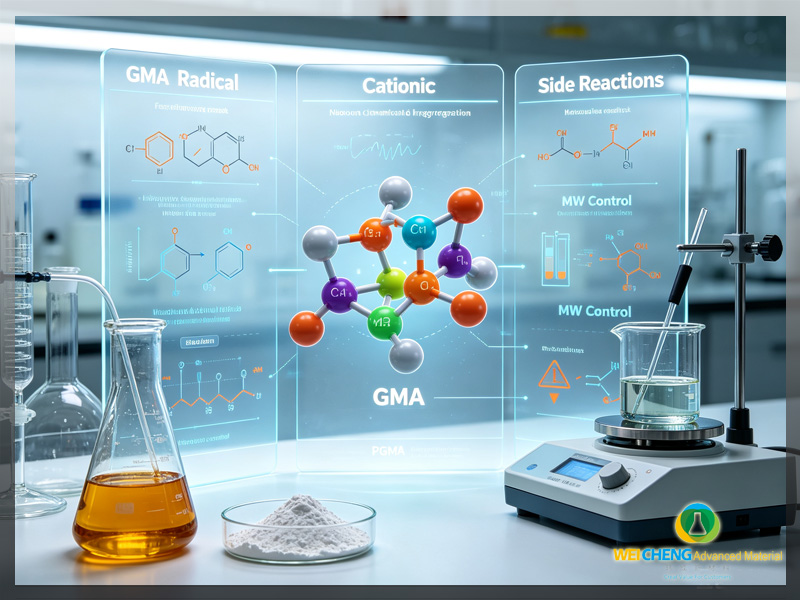
PGMA carries highly strained three‑membered epoxide side chains. Even with this reactive epoxy moiety, PGMA can be efficiently synthesized via free‑radical polymerization without destroying pendant epoxy groups under well‑controlled reaction conditions.
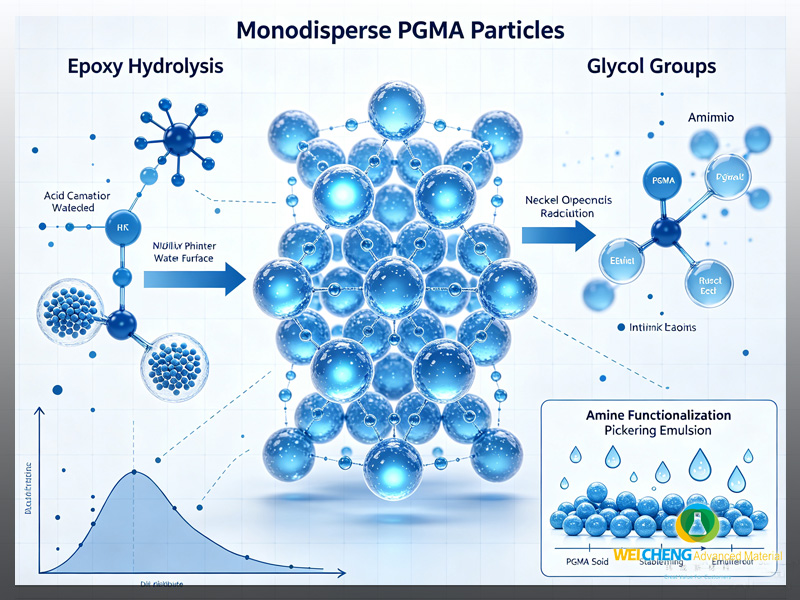
Preparation of Monodisperse PGMA Micro‑Particles
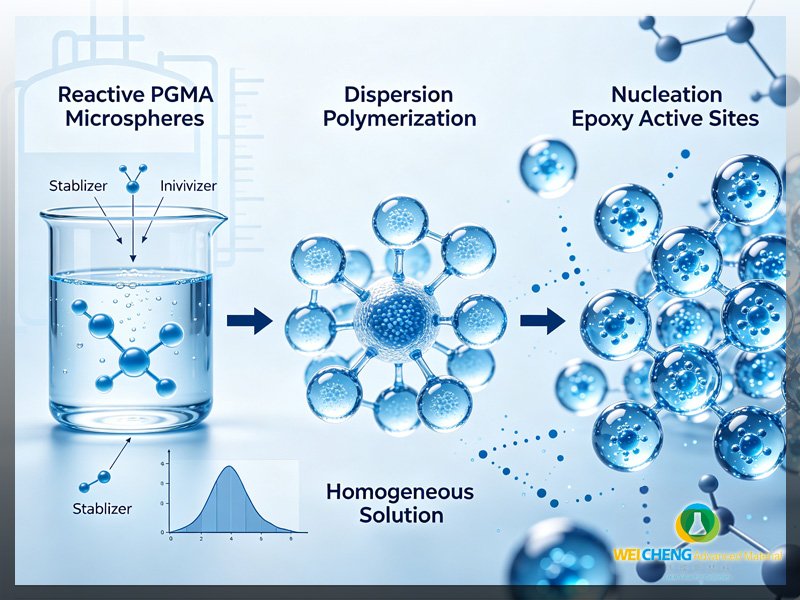
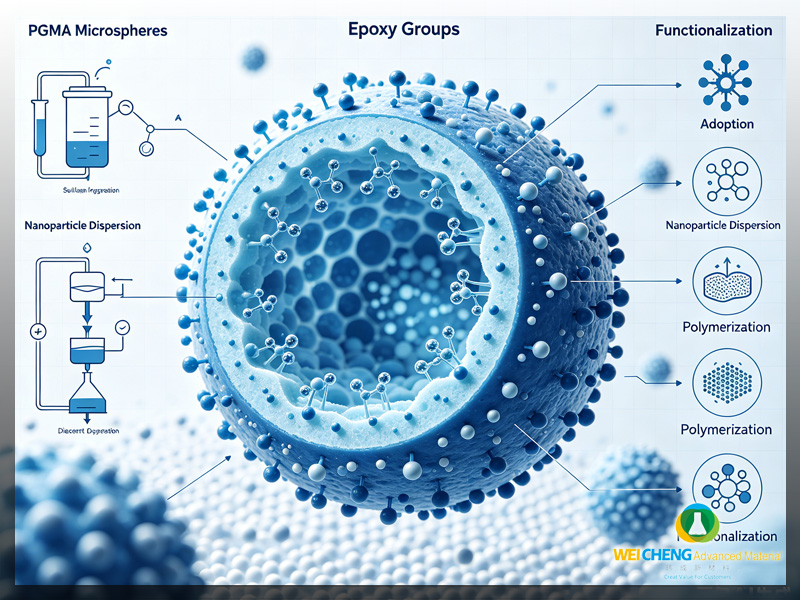
Two‑stage dispersion polymerization is an effective route to produce monodisperse PGMA micro‑particles with narrow particle‑size distribution.Subsequent acid‑catalyzed hydrolysis converts partial surface epoxy groups into glycol (diol) groups. This chemical transformation endows PGMA microspheres with moderate hydrophilicity. The amphiphilic microspheres can act as solid particle stabilizers for Pickering emulsion systems.
Copolymerization Flexibility
PGMA‑based particles can be copolymerized with nearly all common acrylate and methacrylate co‑monomers.By introducing different co‑monomer segments, researchers can tune particle hydrophobic‑hydrophilic balance, glass transition temperature, mechanical performance and surface chemistry. This greatly expands accessible molecular architectures and broadens application boundaries of final particle‑based materials.
Nucleophilic Ring‑Opening for Surface Functionalization
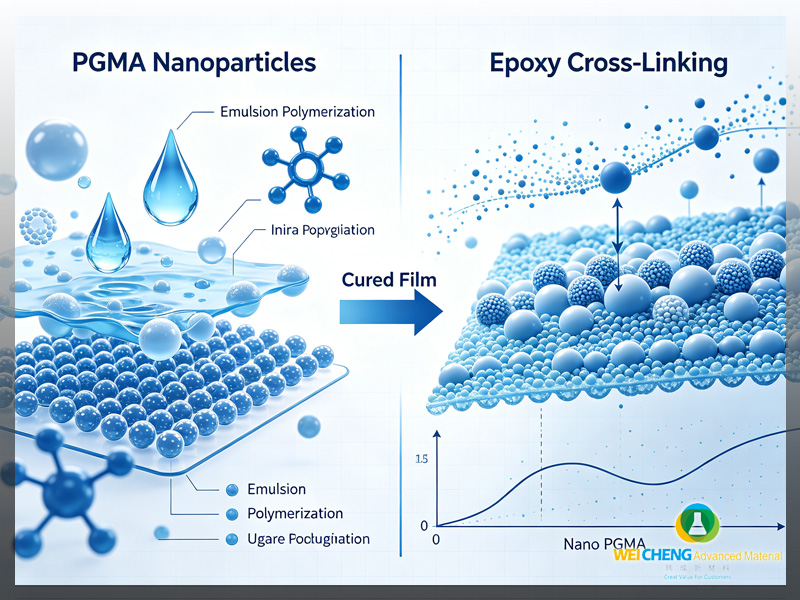
The pendant epoxy side chains of PGMA are susceptible to nucleophilic ring‑opening reactions under diverse reaction conditions to generate functionalized polymer particles.Customers can freely select target functional groups and customize ring‑opening reaction protocols according to their own R&D objectives. Two typical commercial‑oriented PGMA particle grades are widely used:
PGMA Particles with surface amine groupsEpoxy groups react with amine‑containing nucleophiles via ring‑opening to introduce surface‑bound amino groups.Amino‑functionalized PGMA particles provide active sites for further biomolecule conjugation: antibody, enzyme, peptide immobilization for biosensing, affinity separation and biocatalysis.
PGMA Particles with abundant surface epoxy groupsRetain high density of unreacted epoxy groups on particle surface.Mainly applied for general‑purpose surface chemical modification. Epoxy groups can react with amines, thiols, carboxylic acids and other nucleophiles to graft diverse target molecules.
Typical Application Directions
Pickering emulsion stabilizers (hydrolyzed glycol‑modified PGMA microspheres)
Bioseparation, affinity chromatography packing
Biosensor substrates for protein / antibody immobilization
Solid supports for organic synthesis
Composite filler and colloidal template materials
Weicheng Technical Support
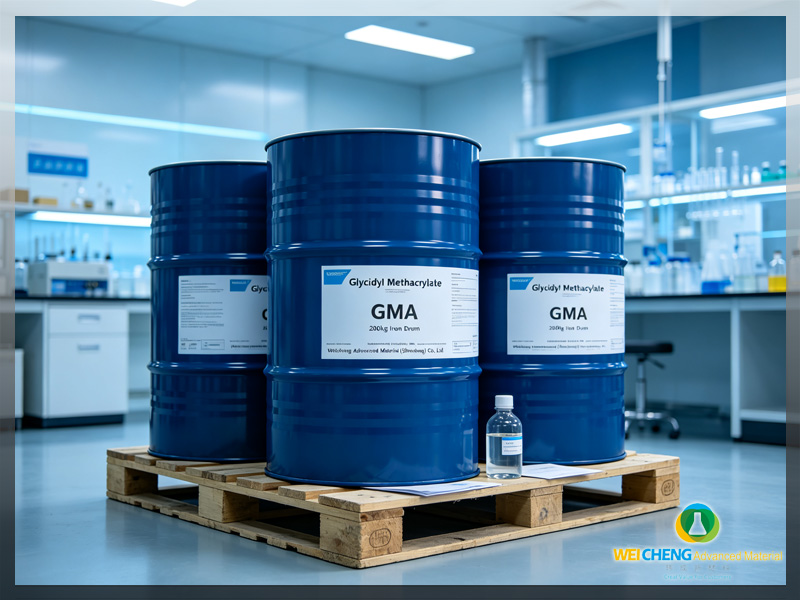
High‑purity GMA monomer (≥99.9%) is the foundation for preparing high‑quality monodisperse PGMA micro‑particles. Impurities and excess inhibitor will interfere with dispersion polymerization and particle monodispersity.Weicheng Advanced Material supplies high‑purity GMA monomer and industrial PGMA products, supporting customer R&D of custom PGMA micro‑particles:
✅ High‑purity GMA monomer for two‑stage dispersion polymerization
✅ Optional low‑MEHQ‑inhibitor grade for particle synthesis
✅ Technical consultation for hydrolysis, copolymerization and epoxy ring‑opening modification
✅ Full COA, TDS, MSDS documentation for export
Contact us for samples and technical guidance for PGMA particle development.

 Home
Home Products
 News
News Call
Call