


Reactive Poly(glycidyl methacrylate) Microspheres Prepared by Dispersion Polymerization
- 2026-08-04
- 134
- Weicheng Advanced Material (Shandong) Co., Ltd.
AI-assisted content. please verify.
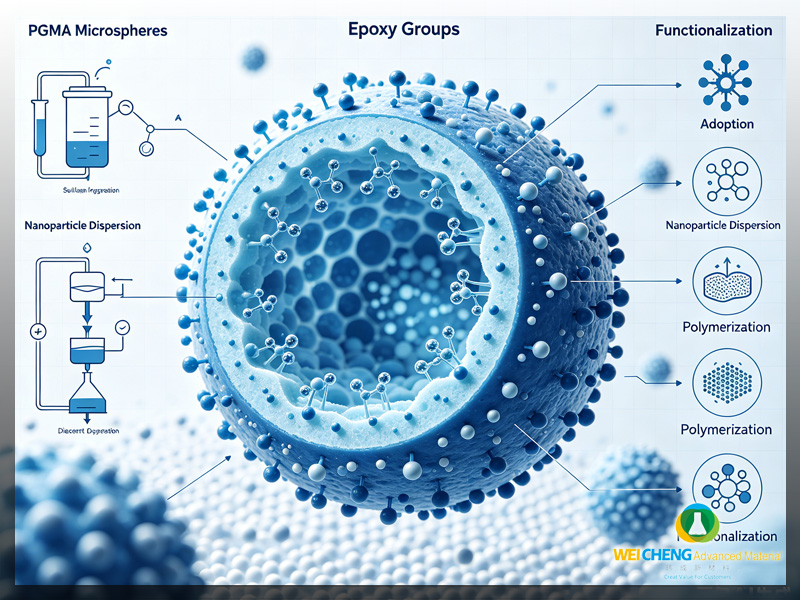
Dispersion polymerization is one of the most powerful one‑step techniques for manufacturing reactive poly(glycidyl methacrylate) (PGMA) microspheres with controllable micron‑size and narrow particle‑size distribution. Different from emulsion or suspension polymerization, dispersion polymerization starts with a homogeneous monomer‑solvent system. As polymerization proceeds, growing polymer chains become insoluble in the medium and precipitate to form stabilized spherical micro‑particles. The resulting PGMA microspheres retain abundant unreacted epoxy groups on both surface and inner pore structures, which renders them highly reactive for further chemical transformation.
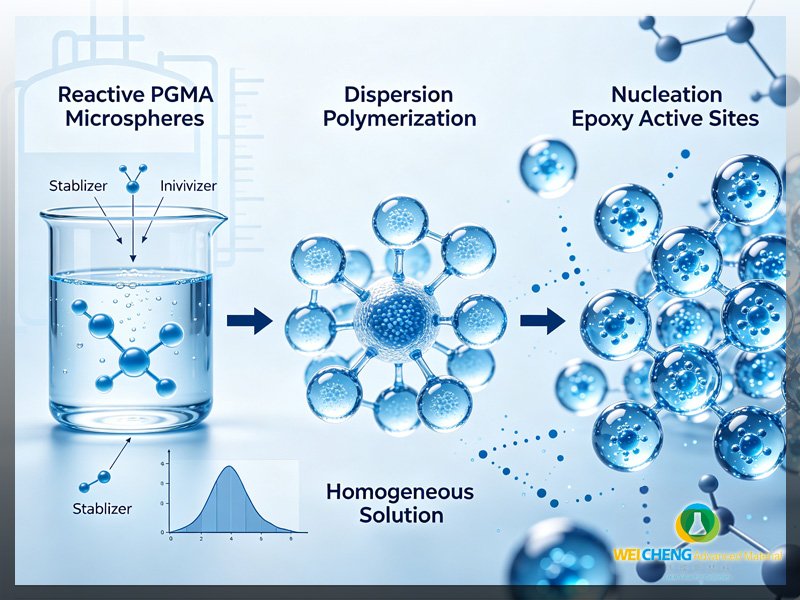
Particle Formation Mechanism in Dispersion Polymerization of PGMA
Homogeneous polymerization stage: GMA monomer, stabilizer and initiator are fully dissolved in organic reaction medium. Free‑radical polymerization is triggered in the continuous phase.
Nucleation stage: When polymer chain length reaches critical value, PGMA oligomers lose solubility and aggregate into primary nuclei.
Particle growth stage: New oligomers adsorb onto nuclei; stabilizer molecules anchor on particle surface to prevent coagulation. Particles steadily grow into uniform spherical microspheres.
Critical control note: Reaction temperature and stirring speed must be strictly regulated to avoid premature epoxy ring‑opening, particle aggregation or irregular morphology. Epoxy groups should remain intact after particle formation to guarantee reactive performance.
Key Process Parameters Affecting PGMA Microsphere Quality
Solvent / medium composition: Determines solubility threshold of PGMA oligomers, directly influences particle diameter and monodispersity.
Stabilizer concentration: Sufficient stabilizer prevents particle coalescence; excessive stabilizer may introduce residual impurities and block surface epoxy sites.
Initiator loading: Adjusts nucleation rate, particle size and monomer conversion.
GMA monomer concentration: Higher monomer dosage generally produces larger microspheres.
Polymerization temperature: Elevated temperature accelerates reaction rate but raises risk of unintended epoxy cross‑linking and gelation.
Core Feature: Reactive Epoxy‑Rich Surface
PGMA microspheres from dispersion polymerization carry high‑density pendant oxirane groups. These surface‑available epoxy sites can undergo diverse nucleophilic ring‑opening reactions:
Amine‑epoxy reaction for amino‑functionalized microspheres for biomolecule immobilization
Thiol‑epoxy reaction to introduce thiol, hydrophobic or bio‑active segments
Carboxylic acid‑epoxy reaction for carboxyl‑grafted microspheres
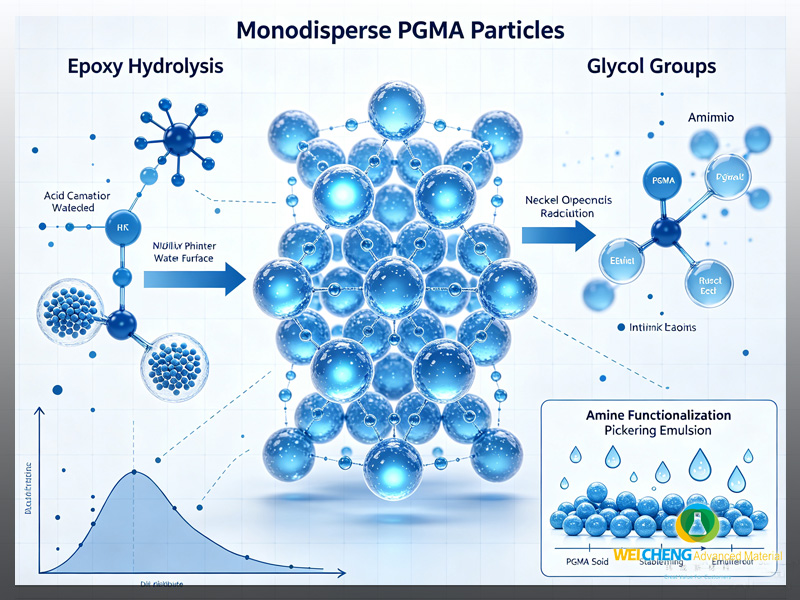
Hydrolysis reaction to generate diol‑glycol surface for Pickering emulsion stabilizers
Benefiting from accessible surface reactivity, these microspheres serve as versatile solid reactive scaffolds, without complicated pre‑treatment before modification.
Typical Application Fields
Affinity chromatography packing media for bioseparation
Enzyme, peptide and antibody immobilization solid supports
Solid‑phase extraction adsorbents for heavy‑metal ions and organic pollutants
Reactive colloidal templates for composite micro‑materials
Functional fillers for coatings and composite systems
Weicheng Advanced Material Technical Support
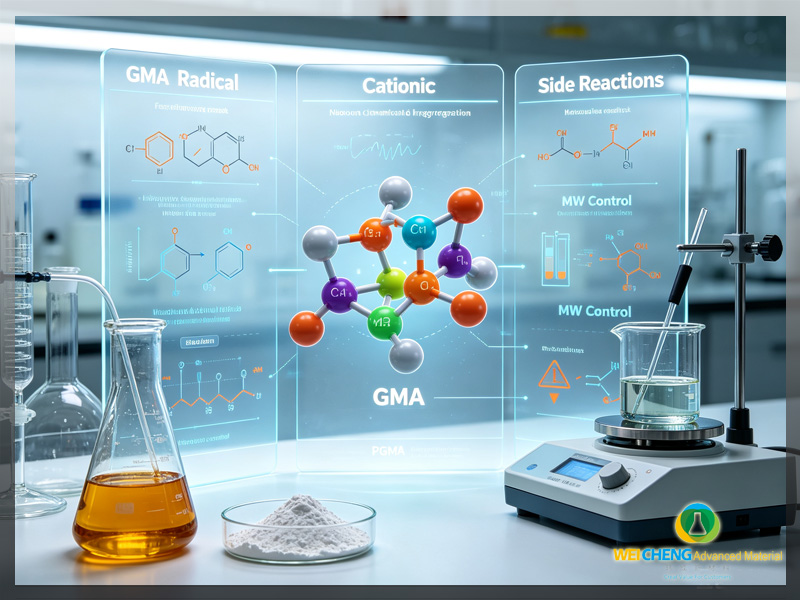
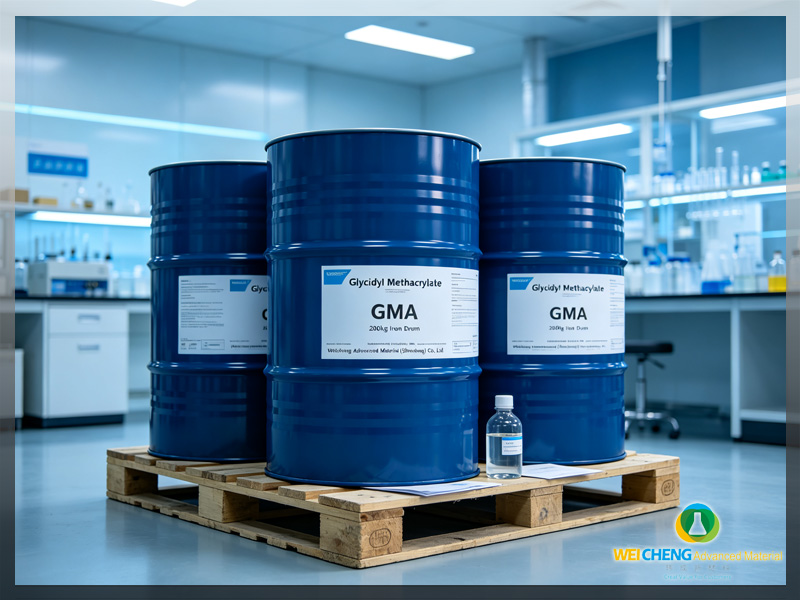
High‑purity GMA monomer is the prerequisite for producing high‑quality reactive PGMA microspheres via dispersion polymerization. Excessive inhibitor or impurities will disturb nucleation‑growth process and reduce effective epoxy content on microsphere surface.
✅ GMA monomer ≥99.9% purity from continuous rectification process
✅ Optional low‑MEHQ inhibitor grade for dispersion polymerization research
✅ Technical consultation for formulation tuning of dispersion polymerization
✅ Complete COA, TDS, MSDS documents for international export
Contact us for GMA samples for your reactive PGMA microsphere R&D.
- Previous:Synthesis and Curing of Poly(glycidyl methacrylate) (PGMA) Nanoparticles
- Next:没有了!

 Home
Home Products
 News
News Call
Call