


Glycidyl Methacrylate (GMA): Bifunctional Monomer, Radical & Ionic Polymerization Mechanism Comparison
- 2026-08-04
- 174
- Weicheng Advanced Material (Shandong) Co., Ltd.
AI-assisted content. please verify.
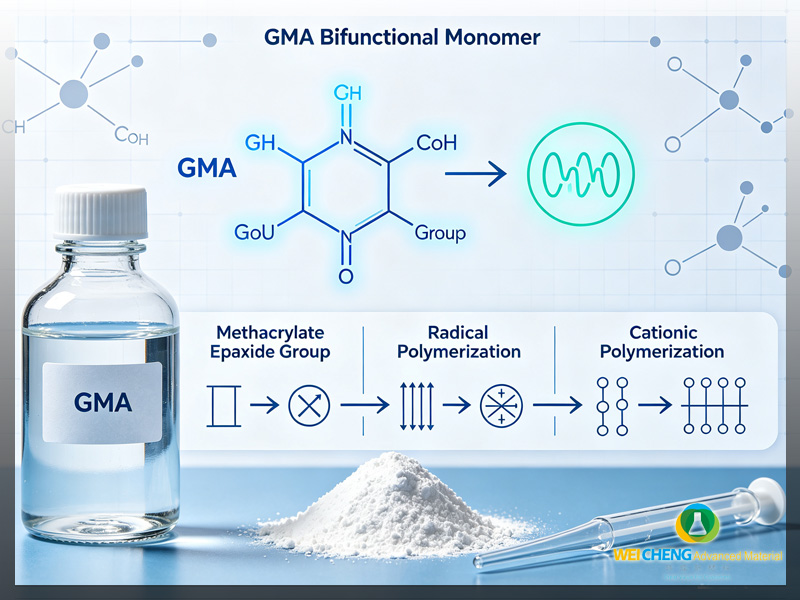
Glycidyl methacrylate (GMA) is a typical bifunctional monomer. It integrates two distinct reactive moieties within one molecule: a polymerizable methacrylate vinyl group and a highly reactive epoxide (glycidyl) group.This unique dual‑reactivity feature enables two major reaction classes:
Radical polymerization: reacts on the methacrylate C=C double bond to build polymer backbone, retaining pendant epoxide groups for subsequent modification;
Epoxide ring‑opening (RO) reactions: consumes the three‑membered epoxy ring to introduce new functional groups or crosslink networks.
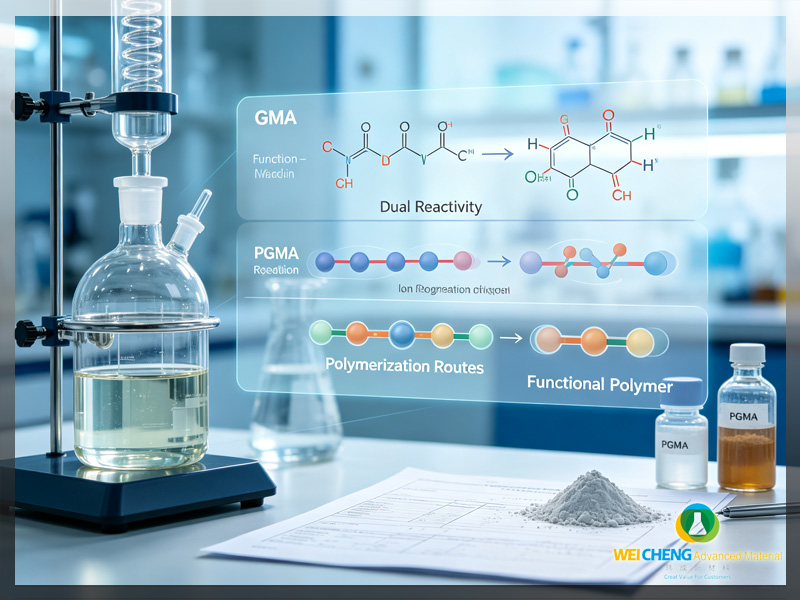
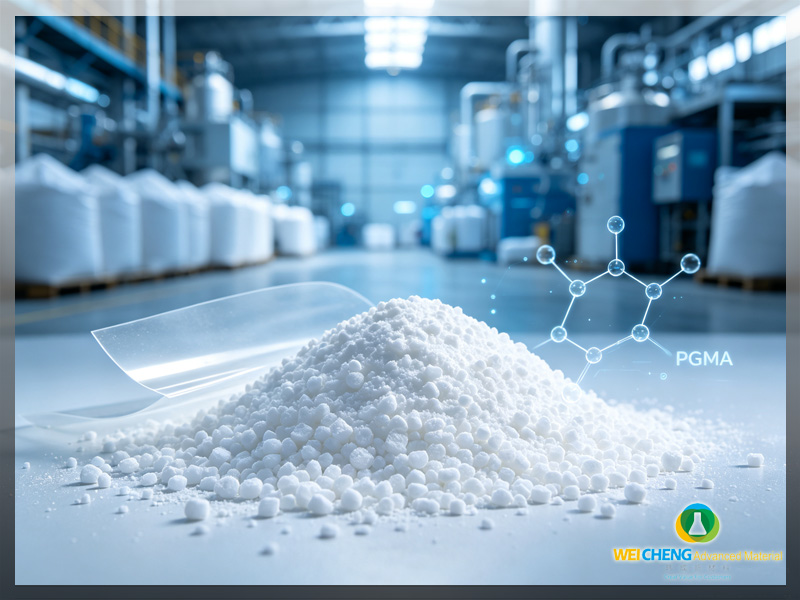
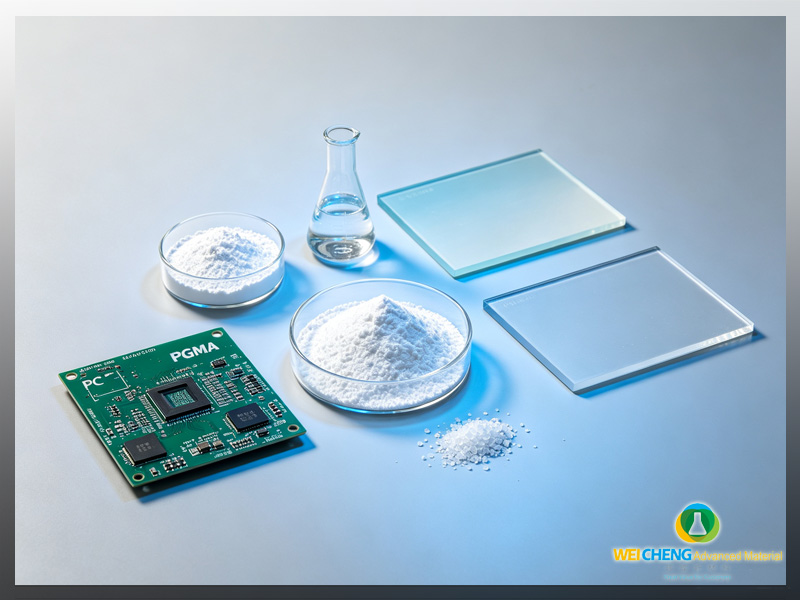
Through these reaction pathways, GMA can be used to construct functional polymers with highly tunable molecular architectures, among which PGMA (poly(glycidyl methacrylate)) is the most representative polymer. This article delivers a mechanism‑focused comparative overview covering radical and ionic polymerization routes for GMA.
 Ionic Polymerization of GMA: Cationic vs Anionic Pathways
Besides widely‑used free‑radical polymerization, GMA can undergo ionic polymerization, including anionic polymerization and cationic polymerization. In ionic systems, both vinyl group and epoxide ring may participate in reactions, making side‑reaction suppression critical.
1. Monomer‑activated anionic polymerization
Monomer‑activated anionic systems exhibit outstanding advantages:
Superior control over molecular weight and molecular‑weight distribution;
Effective suppression of unwanted side reactions such as premature epoxy ring‑opening and cross‑linking;
Capable of designing well‑defined polymer chain architectures.
Limitation: Strict requirements for water‑free, oxygen‑free reaction environment; relatively complex process conditions, mainly applied in laboratory research, difficult for large‑scale industrial production.
2. Cationic activated‑monomer (AM) polymerization
Cationic activated‑monomer processes have obvious processing strengths:
Faster polymerization kinetics;
Relatively simple operation requirements.
However, the trade‑off is reduced structural precision:
Hard to precisely regulate molecular weight and polydispersity;
More prone to uncontrolled side reactions, including intramolecular / intermolecular epoxy ring‑opening and gelation risk;
Less suitable for synthesizing PGMA requiring well‑reserved pendant epoxy groups.
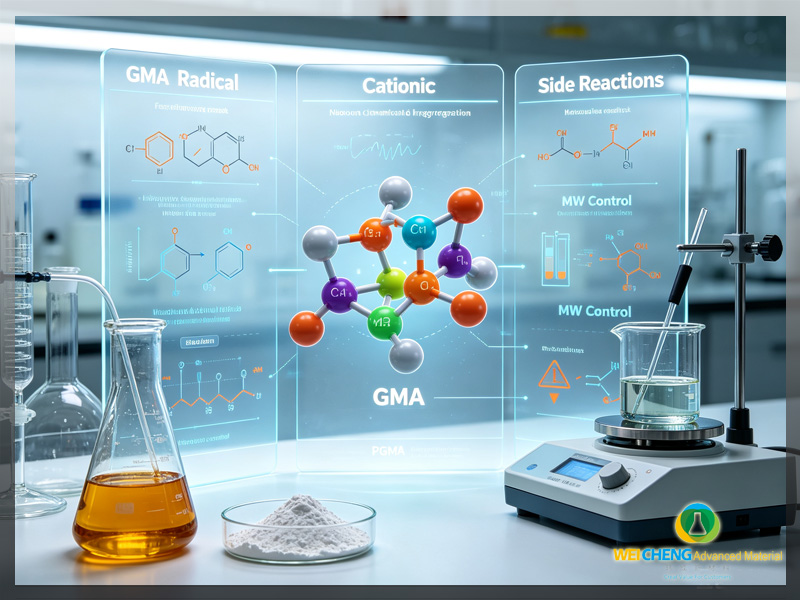
Comparative Summary of GMA Polymerization Routes
| Polymerization Route | Core Merits | Main Drawbacks | Typical Application Scenario |
|---|---|---|---|
| Conventional Free‑Radical Polymerization | Easy scale‑up, low cost, mature industrial technology | Moderate PDI; risk of epoxy side‑reactions at high temperature | Industrial PGMA for coatings, inks, biodegradable‑plastic modification |
| Controlled Radical (ATRP / RAFT) | Good molecular‑weight control, narrow PDI | High cost, low throughput | High‑end lab functional polymer synthesis |
| Monomer‑activated Anionic Polymerization | Excellent MW control, few side reactions | Rigorous reaction conditions | Academic research, precise‑structure polymer |
| Cationic Activated‑Monomer (AM) | Fast kinetics, simple operation | Poor structural control, high side‑reaction risk | Limited special‑purpose research |
Industrial Practical Insight
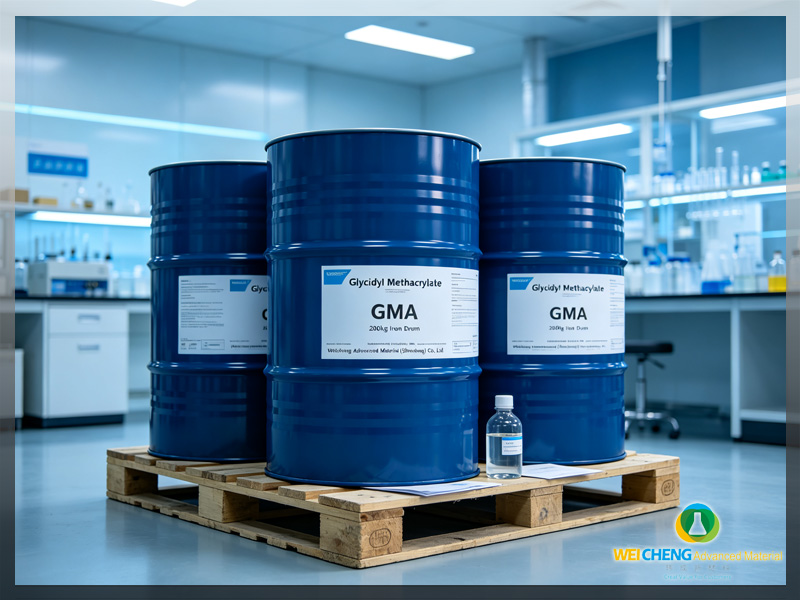
For mass‑produced PGMA that needs to retain intact pendant epoxide groups, industrial manufacturers predominantly adopt well‑optimized free‑radical polymerization. Strict temperature and initiator control avoid accidental ring‑opening cross‑linking during chain growth.Weicheng Advanced Material supplies 99.9% high‑purity GMA monomer (annual capacity 6000 tons) and industrial‑grade PGMA (Mw 40 000‑80 000). High‑purity starting monomer is the prerequisite to minimize side‑reactions in all polymerization systems.
Outlook
Radical polymerization dominates current commercial production. Anionic and cationic ionic polymerization remain powerful laboratory tools to access special GMA‑based polymer architectures. Deep understanding of these competing mechanisms guides formulation design and process parameter optimization for functional epoxy‑containing acrylic polymers.
Weicheng Product Advantages
✅ High‑purity GMA monomer ≥99.9%, continuous rectification process
✅ Industrial PGMA with adjustable molecular‑weight Mw 40 000‑80 000
✅ Low residual monomer, low‑yellowing electronic‑grade option
✅ Complete COA, TDS, MSDS documents for global export
✅ Technical support for polymer‑synthesis formulation R&D
Contact us for GMA / PGMA samples for your polymerization research.


 Home
Home Products
 News
News Call
Call