


Poly(glycidyl methacrylate): Ring-opening and Radical Polymerization Mechanisms
- 2026-08-04
- 186
- Weicheng Advanced Material (Shandong) Co., Ltd.
AI-assisted content. please verify.
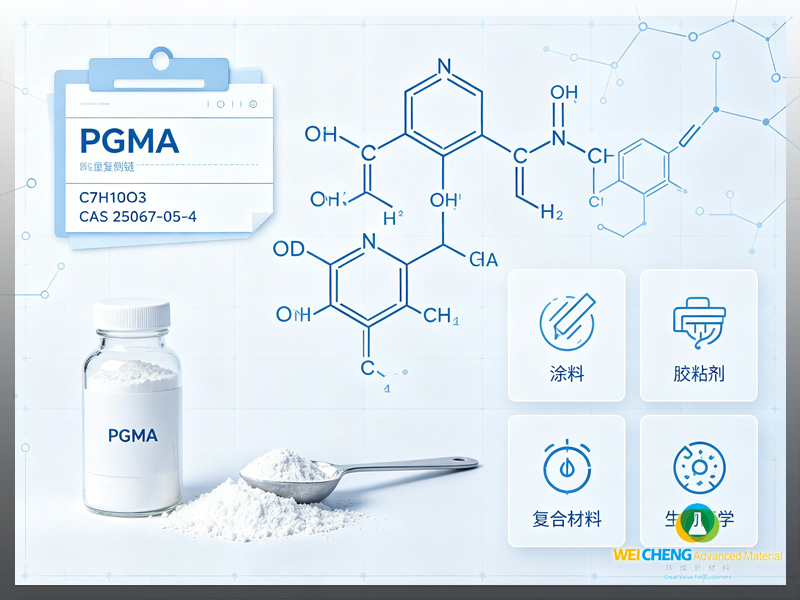
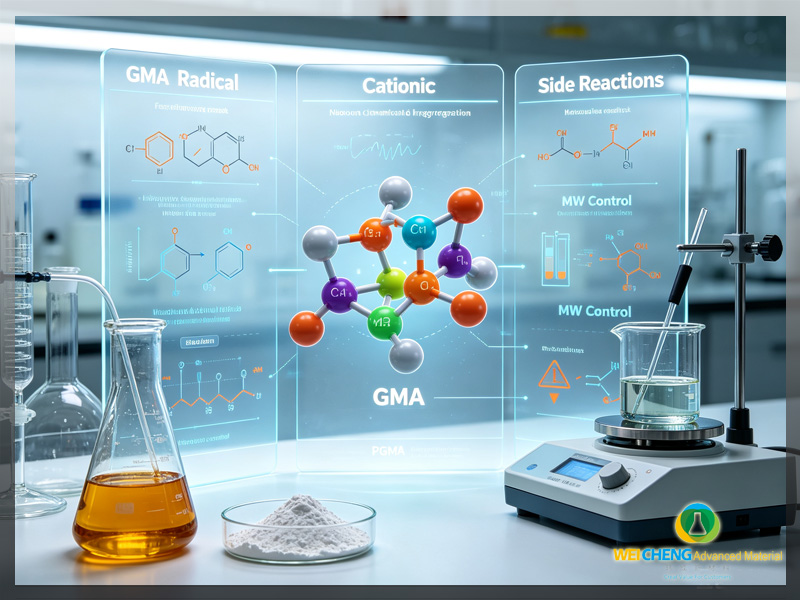
Poly(glycidyl methacrylate) (PGMA) possesses two distinctive reactive structures: polymerizable vinyl group on glycidyl methacrylate (GMA) monomer, and pendant epoxy (oxirane) groups along the polymer backbone after polymerization.Two core chemical reactions dominate PGMA utilization:
Radical polymerization: Build PGMA polymer chains from GMA monomers;
Epoxy ring-opening reaction: Post-polymerization modification to create functional PGMA derivatives.Mastery of these two mechanisms is critical for controlling PGMA molecular weight, residual monomer content, and designing customized functional materials. Weicheng Advanced Material produces controllable industrial PGMA (Mw 40,000–80,000) based on optimized free radical polymerization technology.
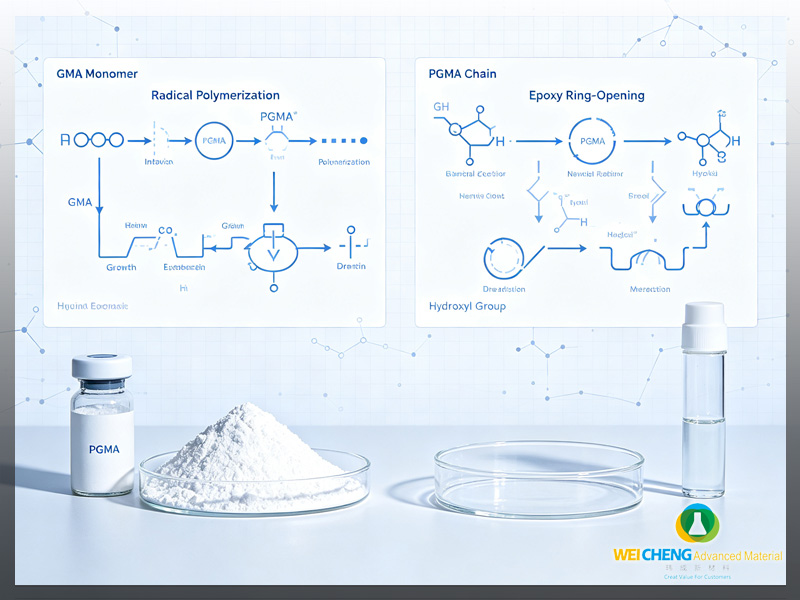
1. Radical Polymerization Mechanism of GMA for PGMA Synthesis
The formation of PGMA relies on radical polymerization of the C=C double bond of GMA monomer. Importantly, under properly controlled temperature, the epoxy side groups remain inert and do not participate in chain growth.
1.1 Conventional Free Radical Polymerization
Three fundamental stages: initiation, propagation, termination.
Initiation: Peroxide or azo initiator decomposes into free radicals; radicals attack the vinyl group of GMA to generate monomer radicals.
Propagation: Active monomer radicals continuously combine with new GMA monomers to extend polymer chains, forming PGMA backbone. Epoxy groups are retained as side chains.
Termination: Radical coupling or disproportionation terminates chain growth.
Key Control Risks:Excessively high temperature triggers side reactions. Epoxy groups may undergo unintended crosslinking, leading to gelation. Unoptimized processes result in high residual GMA monomer and wider molecular weight distribution (higher PDI).
1.2 Controlled Radical Polymerization (ATRP / RAFT)
For high-precision lab synthesis: ATRP and RAFT realize reversible activation of radical chains.
✅ Benefits: Predictable molecular weight, narrow polydispersity, well-defined polymer architecture.
⚠️ Limitation: High raw material cost, difficult for large-scale industrial manufacturing. Commercial PGMA for coatings, inks and biodegradable plastics mainly adopts optimized conventional free radical polymerization.
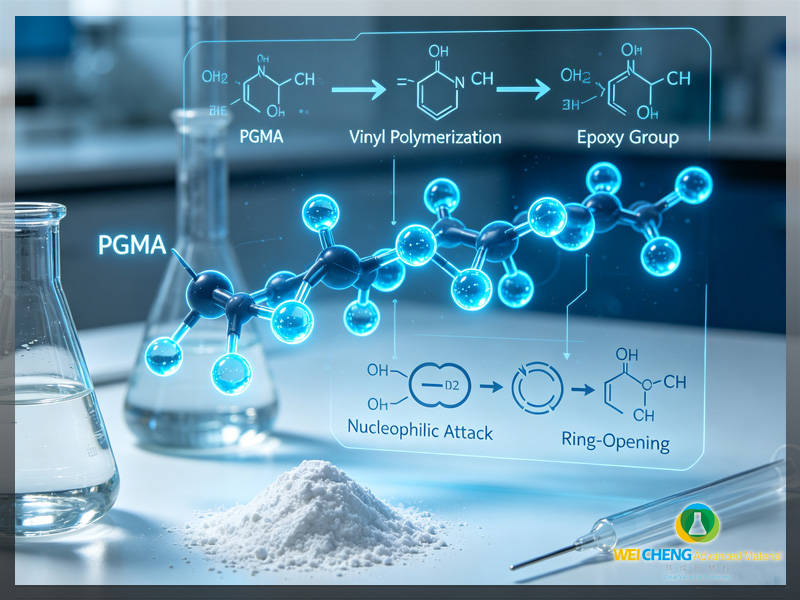
2. Mechanism of PGMA Pendant Epoxy Ring-opening Reaction
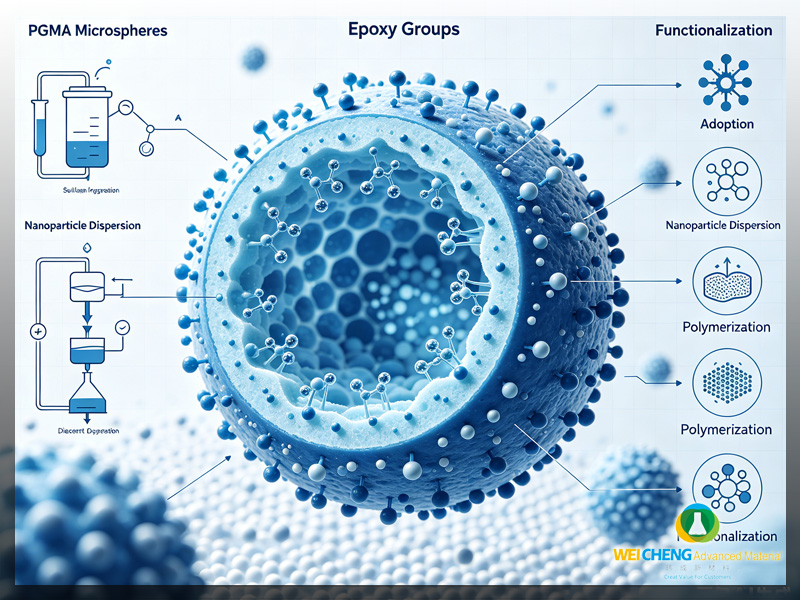
After PGMA macromolecular chain is formed, pendant three-membered epoxy ring has high ring strain, susceptible to nucleophilic ring-opening reaction. This is the core principle of all PGMA post-modification.
General Reaction Principle
Nucleophiles attack the carbon atom of the oxirane ring, breaking the C–O bond. The epoxy ring opens, and a hydroxyl group (-OH) is generated on the side chain.The newly formed hydroxyl group can further participate in secondary reactions, enabling multi-step sequential modification to synthesize multi-functional PGMA derivatives.
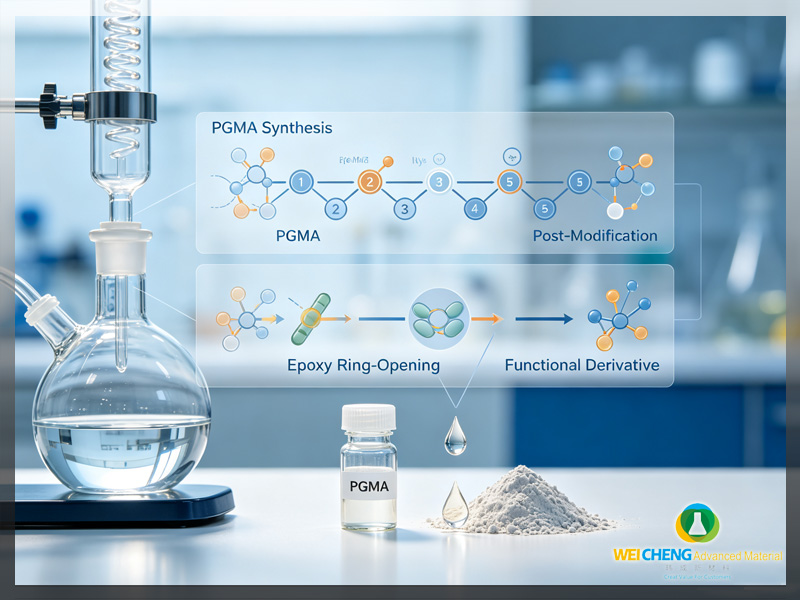
Typical Ring-opening Reaction Systems
Amine–epoxy ring-opening
Thiol–epoxy ring-opening
Carboxylic acid–epoxy ring-opening
Azide–epoxy ring-opening
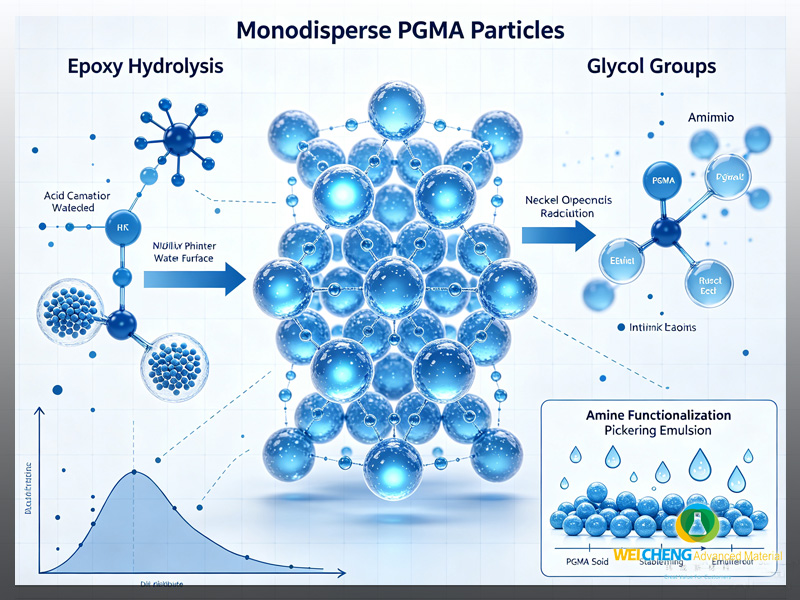
Epoxy hydrolysis reaction
Practical Significance
This mechanism supports wide application:
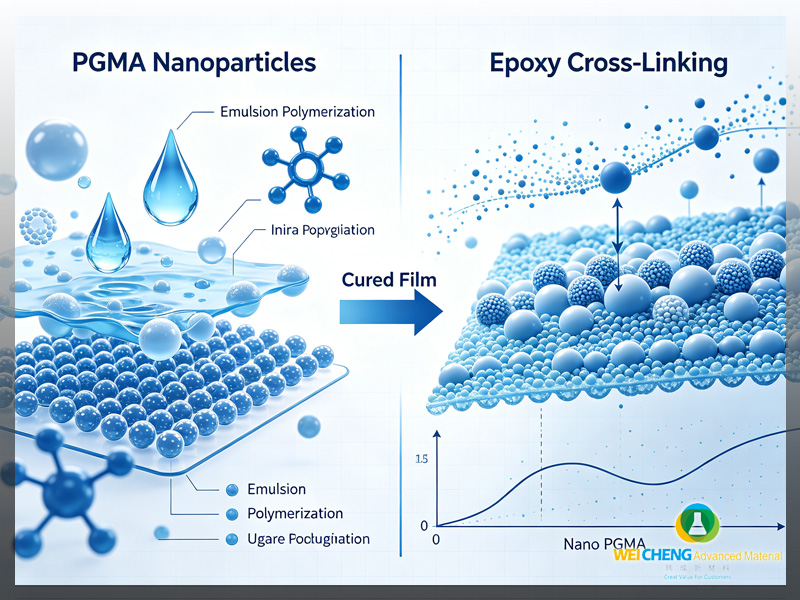
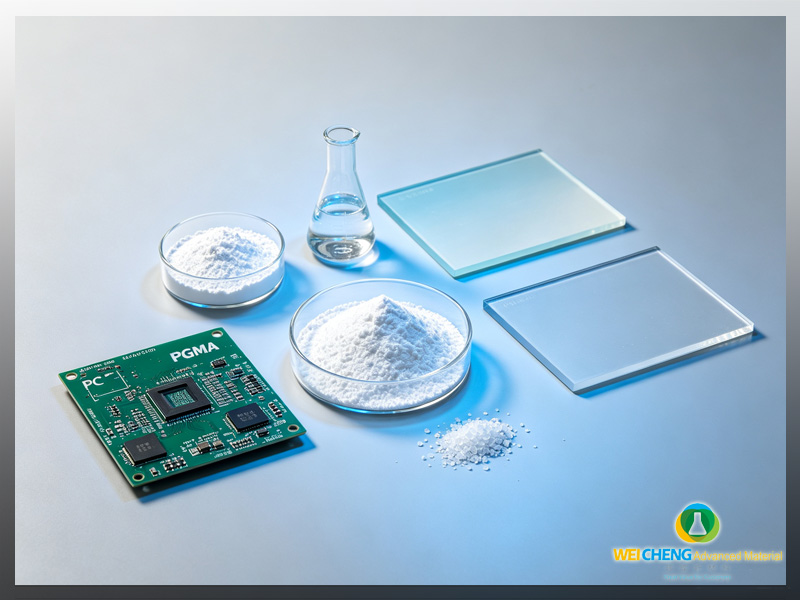
In PCB dual-curing solder resist ink: PGMA epoxy groups react with carboxyl resin during post-bake to build dense crosslink network;
In material R&D: Graft functional molecules onto PGMA to prepare antimicrobial materials, drug delivery carriers, nanofiller compatibilizers.
3. Critical Distinction: Two Types of Reactive Sites
It is necessary to distinguish the two reactive sites to avoid process errors:
Vinyl C=C bond: Only reacts during polymerization to construct PGMA main chain;
Pendant epoxy group: Stable during controlled polymerization; reacts only in post-modification or thermal curing of end products.
4. Industrial Guidance for Weicheng PGMA
Based on the above reaction mechanisms, our production strictly controls reaction temperature, initiator dosage and reaction time:
✅ Maximize GMA conversion rate, lower residual monomer ≤0.3 wt%;
✅ Prevent accidental epoxy crosslinking and gel during polymerization;
✅ Stabilize molecular weight range and narrow molecular weight distribution.
Weicheng Advanced Material PGMA Advantages
✅ Customizable molecular weight Mw 40,000–80,000
✅ Low residual monomer, suitable for curing system and post-modification research
✅ Low-yellowing electronic grade with low hydrolyzable chlorine for PCB ink
✅ Stable batch consistency
✅ Complete COA, TDS, MSDS for export
Contact us for PGMA samples and technical consultation.

 Home
Home Products
 News
News Call
Call