


Poly(glycidyl methacrylate) PGMA|CAS 25067‑05‑4, Chemical Properties & Applications
- 2026-08-04
- 144
- Weicheng Advanced Material (Shandong) Co., Ltd.
AI-assisted content. please verify.
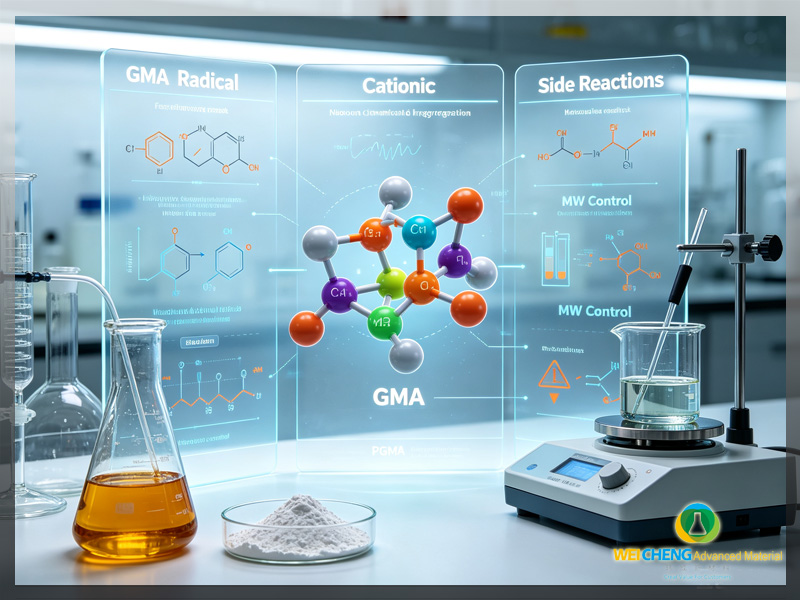
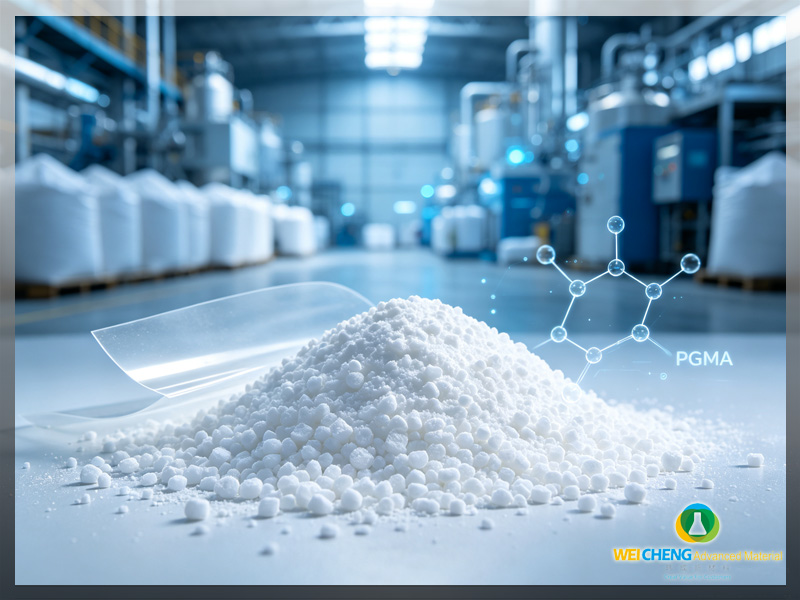
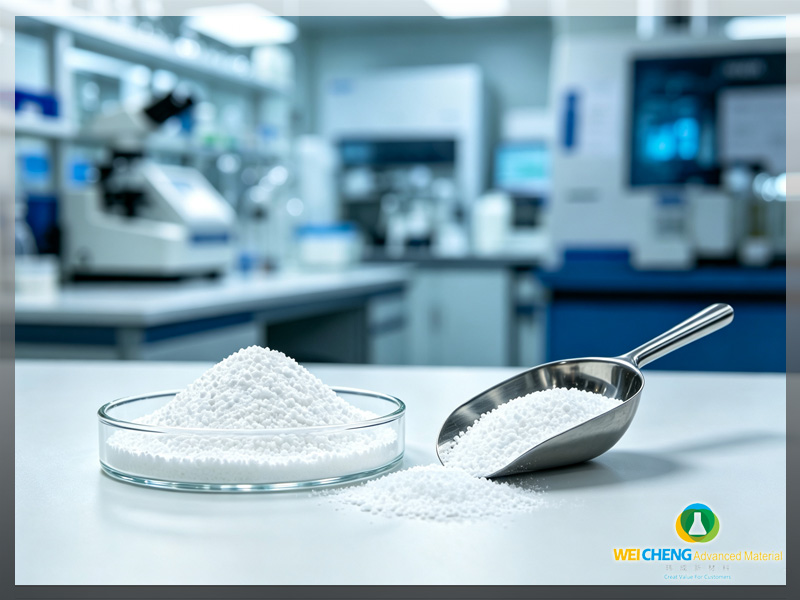
Poly(glycidyl methacrylate), abbreviated as PGMA, has repeating‑unit chemical formula C₇H₁₀O₃, CAS registry number 25067‑05‑4. It is a widely‑studied versatile functional polymer synthesized by polymerization of glycidyl methacrylate (GMA) monomers.
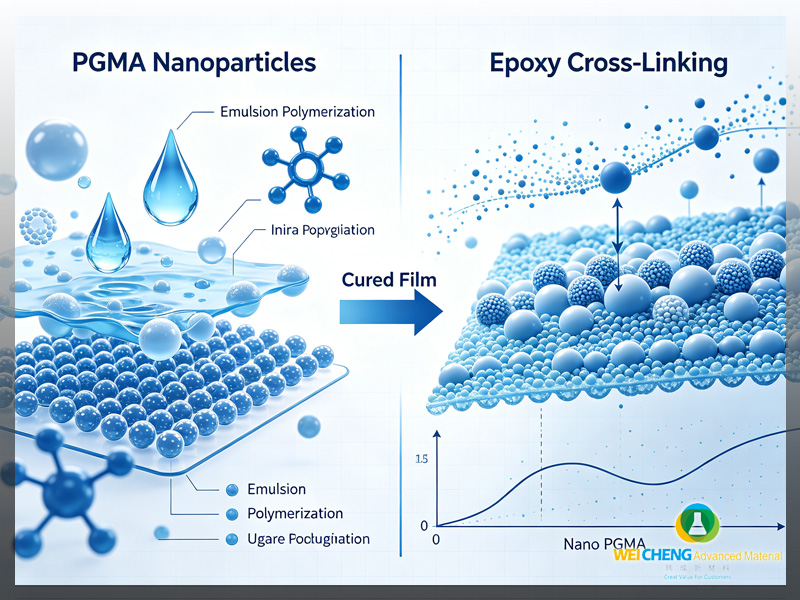
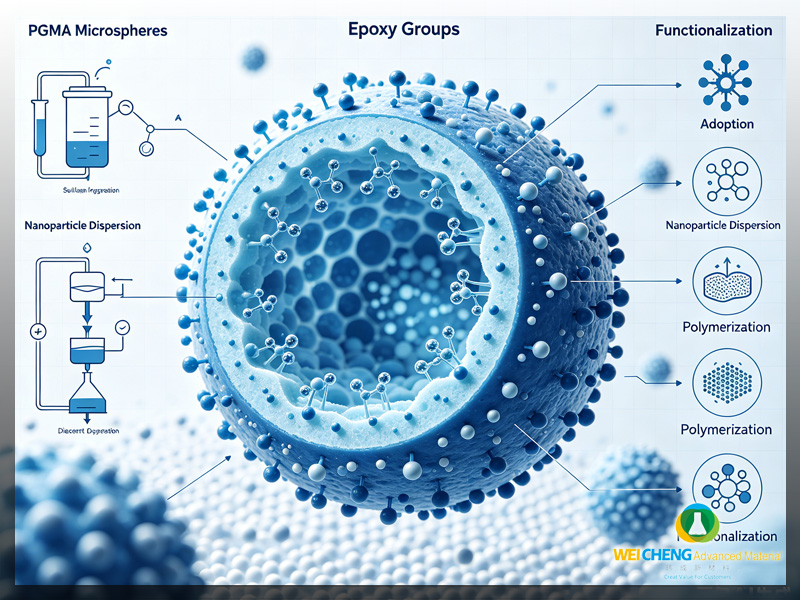
The most prominent structural feature of PGMA is abundant pendant epoxy groups distributed along the polymer backbone. These reactive epoxide moieties endow PGMA with inherent adhesion performance and cross‑linking capability, laying the foundation for physical‑property adjustment and chemical post‑modification.
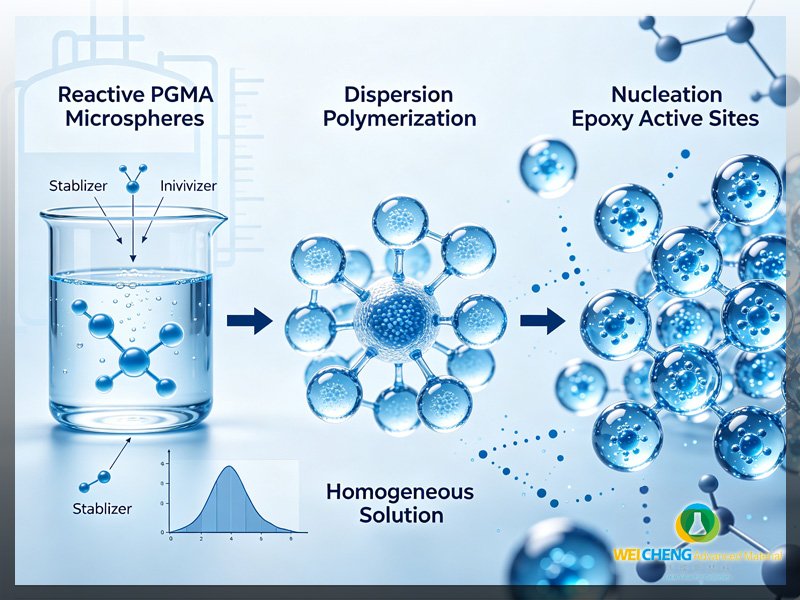
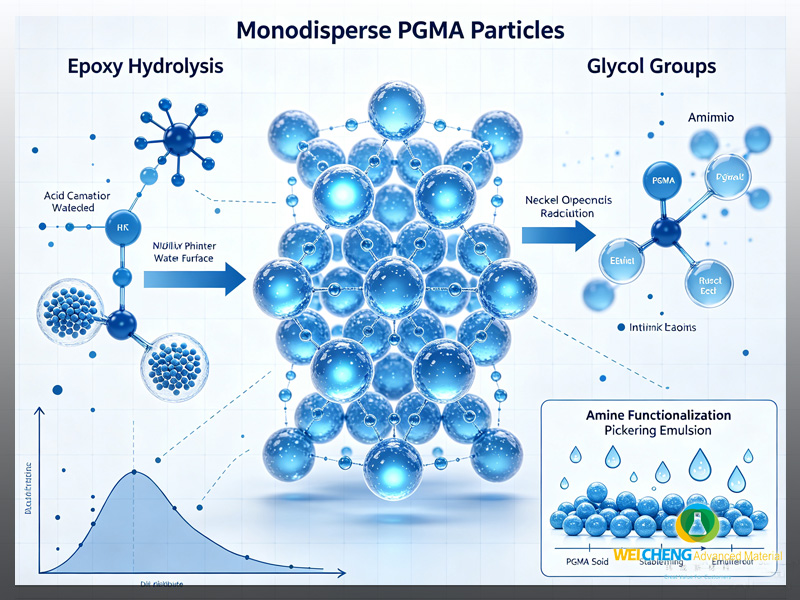
PGMA can be chemically tailored via two major approaches: copolymerization with other monomers and post‑polymerization functionalization of epoxy side groups. Through these modification strategies, targeted performance can be achieved to satisfy different end‑use requirements.
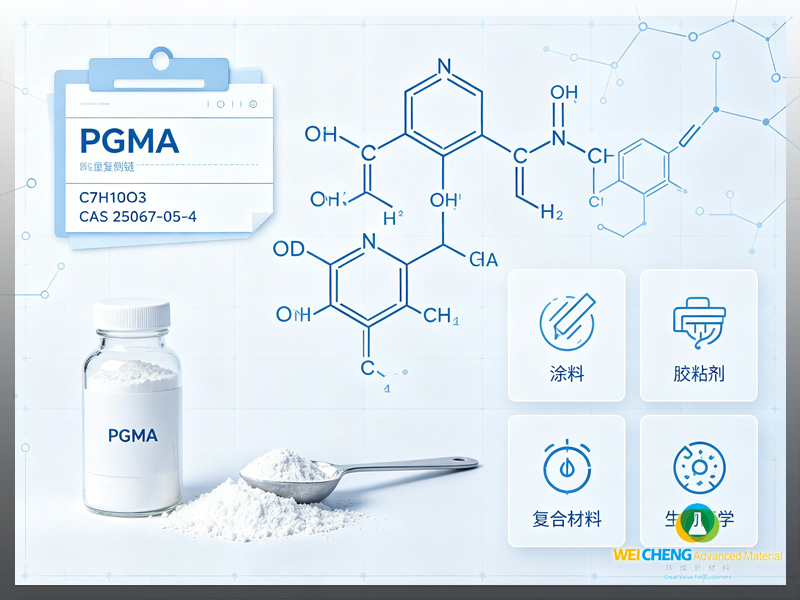
Main Application Fields
1. Industrial Applications
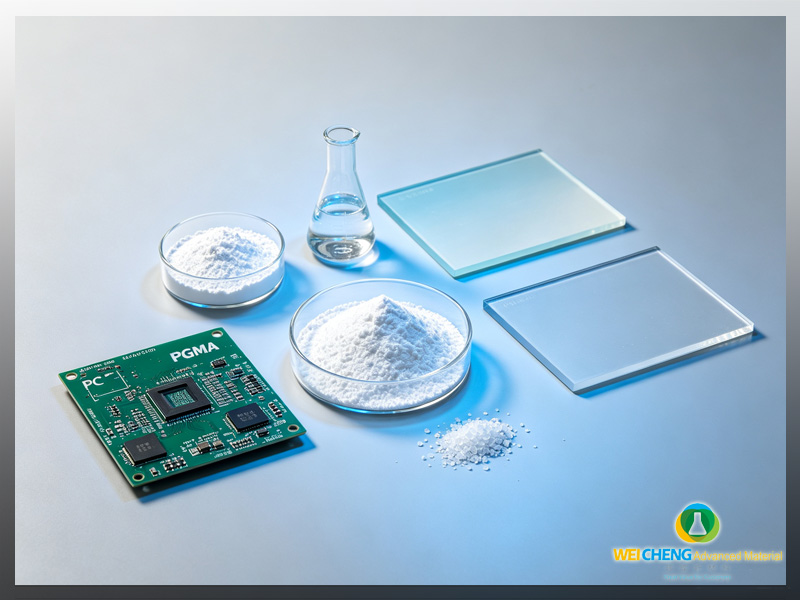
Coatings: PGMA acts as reactive additive in UV‑curable coatings, powder coatings and PCB solder‑resist ink; participates in cross‑linking curing to improve film hardness, adhesion and chemical resistance.
Adhesives: Epoxy groups enhance interfacial bonding strength between adhesive and substrates.
Composite matrix & compatibilizer: Used as matrix material or interfacial modifier for polymer composites; improves compatibility between inorganic fillers and organic polymer phases. Also widely adopted as chain extender for PLA/PBAT biodegradable plastics.
2. Biomedical Research Applications
Benefiting from acceptable biocompatibility and tunable chemical reactivity, PGMA is extensively explored in biomaterial research:
Drug delivery systems: PGMA‑based nanoparticles, microspheres and hydrogels serve as drug carriers for controlled‑release research.
Tissue‑engineering scaffolds: Cross‑linked PGMA porous structures provide supporting micro‑environment for cell adhesion and regeneration.
Core Value in Polymer Science
As a classic reactive platform polymer, PGMA occupies an important position in materials science and polymer chemistry. Its modifiable chemical structure enables researchers and formulators to design advanced materials with custom‑tailored properties, covering both large‑scale industrial manufacturing and cutting‑edge biomedical R&D.
Weicheng Advanced Material PGMA Supply
✅ PGMA CAS 25067‑05‑4, customizable molecular weight Mw 40 000‑80 000
✅ Low‑yellowing electronic‑grade for PCB ink and high‑transparency coatings
✅ Low residual monomer grade for post‑modification and biomedical exploratory research
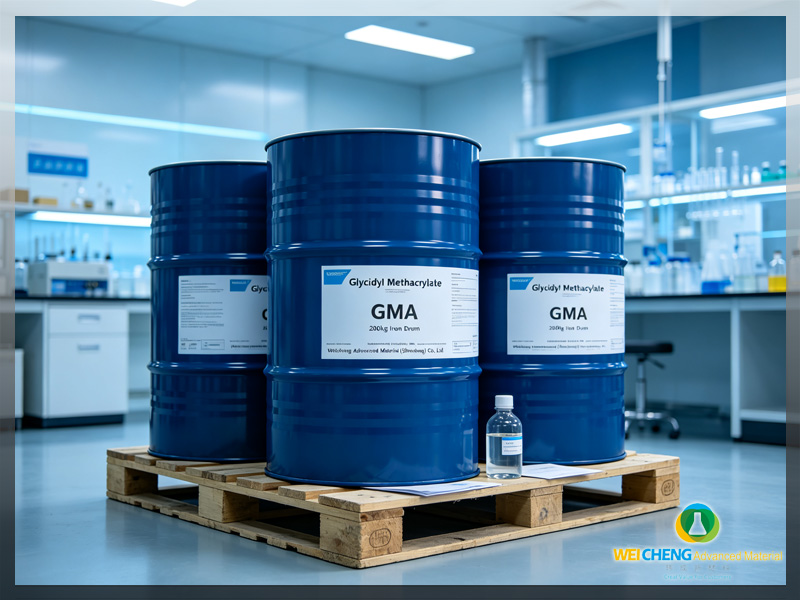
✅ Derived from self‑produced high‑purity GMA monomer (≥99.9 %, annual output 6000 tons)
✅ Complete COA, TDS, MSDS documents for global export
Contact us to obtain PGMA samples and full technical datasheets.

 Home
Home Products
 News
News Call
Call