


Sustainable & Green Synthesis Approaches of Poly(glycidyl methacrylate) (PGMA)
- 2026-08-04
- 129
- Weicheng Advanced Material (Shandong) Co., Ltd.
AI-assisted content. please verify.
Sustainable and Green Synthesis Approaches for PGMA
Global environmental regulations, carbon reduction targets and market demand for eco-friendly chemicals drive the innovation of clean polymer manufacturing technology. Traditional PGMA production relies on petroleum-based raw materials and organic solvent systems. Nowadays, researchers continuously develop sustainable, green synthesis routes to lower carbon footprint, reduce waste emission and improve environmental compatibility.
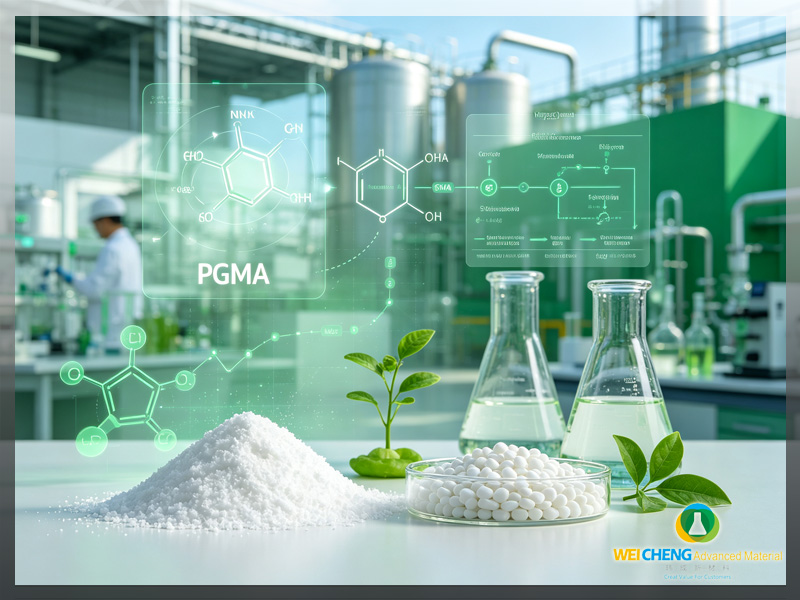
Core Directions of Green PGMA Synthesis
In line with the worldwide pursuit of sustainable chemistry, academic and industrial teams are exploring environmentally benign manufacturing approaches for PGMA. The main optimization directions cover renewable raw materials, green solvent systems and low-energy production processes.
1. Bio-based Renewable Feedstocks
A major research hotspot is developing bio-based glycidyl methacrylate (GMA) monomers sourced from renewable biomass resources.Conventional GMA is synthesized from fossil-derived methacrylic acid and epichlorohydrin. The new route replaces part or all petroleum feedstock with biomass precursors. After polymerization, bio-based PGMA is obtained.
✅ Advantages: Lower dependence on fossil resources, reduce lifecycle carbon emissions, support biodegradable material circular economy.
⚠️ Current challenge: High production cost, limited scale-up technology; still mainly in laboratory and pilot research stage.
2. Environmentally Benign Solvent Systems
Traditional solution polymerization adopts volatile organic solvents (VOCs). Green improvements include:
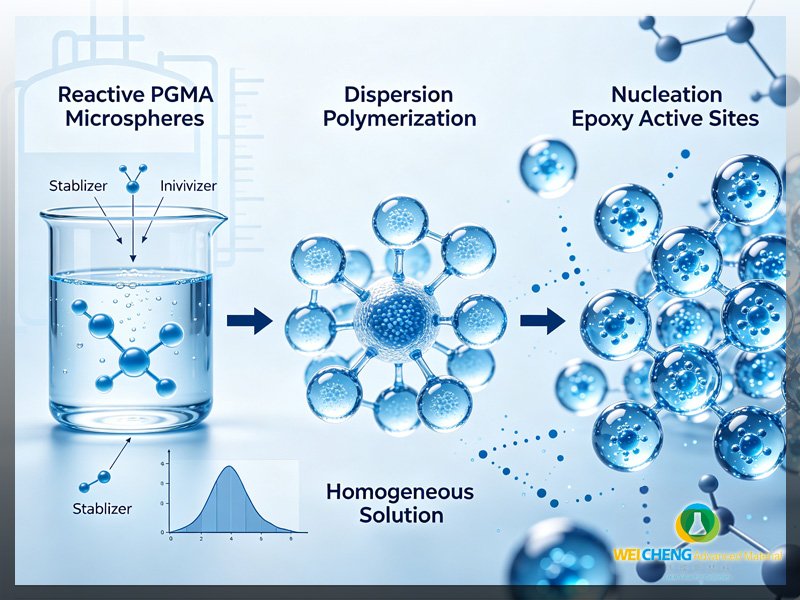
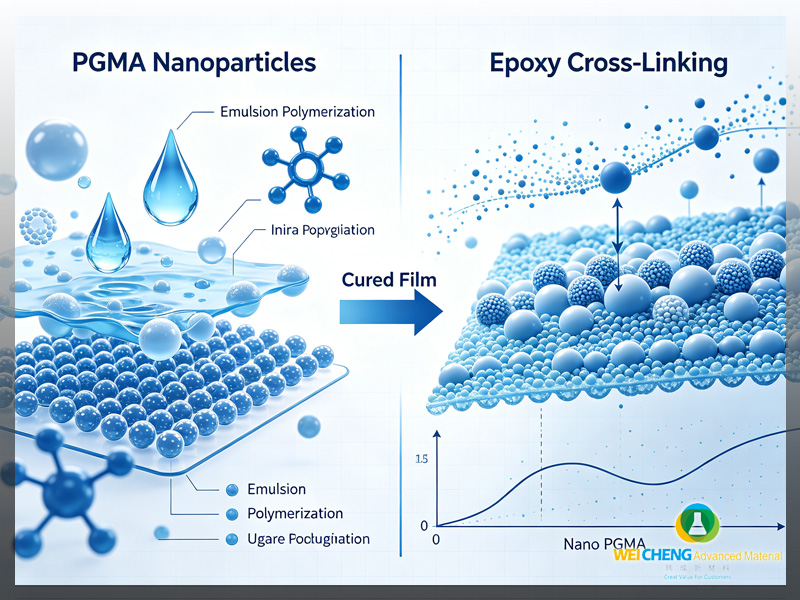
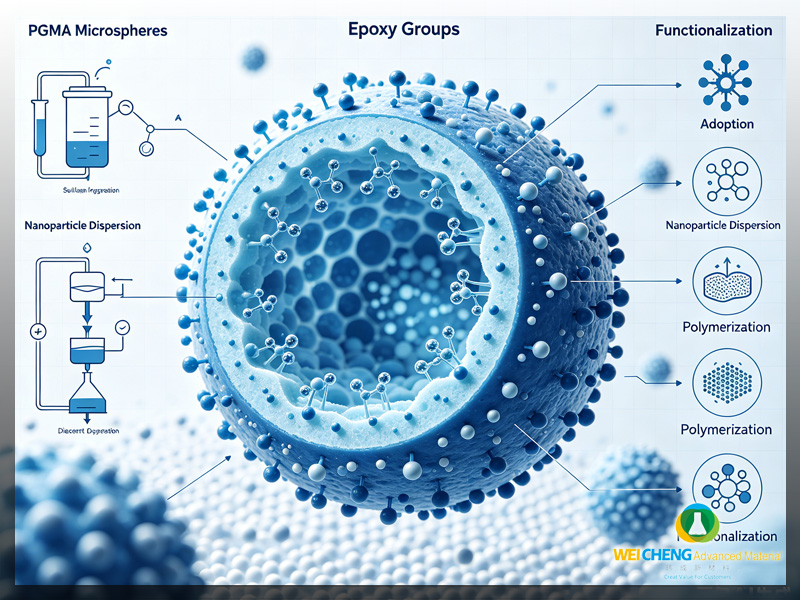
Water-based emulsion / suspension polymerization, eliminating toxic organic solvents
Supercritical fluid reaction medium
Recyclable green solvents with low volatility and low toxicityThese methods cut VOC emissions and simplify waste liquid treatment.
3. Energy-Efficient Polymerization Processes
Process optimization aims to reduce heating duration and reaction temperature:
Low-temperature initiation systems
Photopolymerization (UV / visible light initiated PGMA synthesis)
Continuous polymerization technologyCompared with traditional batch thermal polymerization, these routes save energy consumption and reduce thermal side reactions, helping control residual monomer content.
Industrial Reference & Practical Significance
While fully bio-based PGMA has not yet achieved large-scale commercial production, existing industrial PGMA manufacturers can implement transitional green upgrades:
Adopt high-purity GMA raw material to improve conversion rate and reduce waste;
Optimize polymerization process to lower residual monomer, simplify subsequent purification;
Recycle solvent in production line to cut resource consumption.
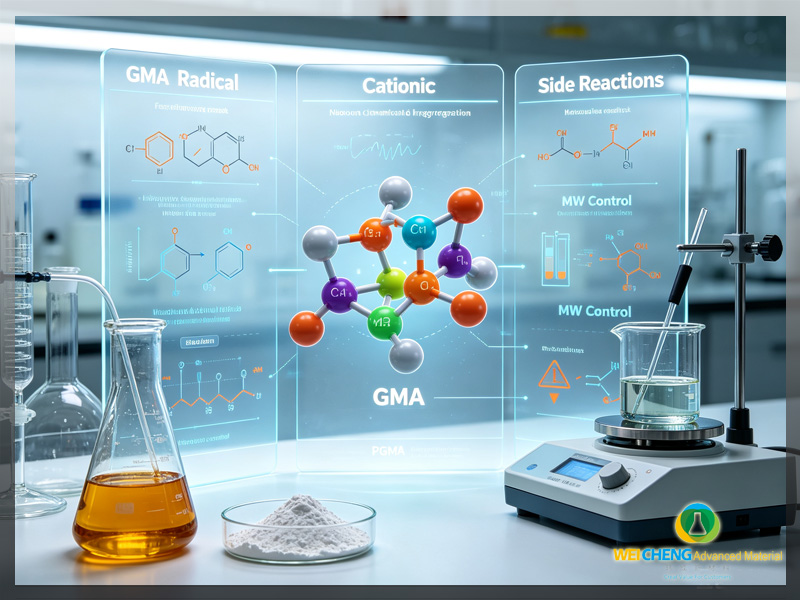
Weicheng Advanced Material implements process optimization for PGMA production: optimized free-radical polymerization technology improves monomer conversion, reduces by-products, and supports low-carbon manufacturing requirements.
Future Outlook of Green PGMA
With stricter REACH, carbon tariff and eco-label requirements, green synthesis technology of PGMA will become an important competitive advantage.The industrial development roadmap is expected to be:Optimized low-waste petroleum-based PGMA → partially bio-based PGMA → fully bio-based PGMA with zero-VOC production process.
Weicheng Advanced Material
✅ Optimized polymerization process for high monomer conversion, less waste generation
✅ Low residual monomer PGMA grade, reducing volatile emissions in downstream application
✅ Stable industrial mass production, continuous process improvement for energy conservation
✅ Complete export documentation (COA, TDS, MSDS)
Contact us for PGMA samples and technical data.

 Home
Home Products
 News
News Call
Call