


Latest Innovations & Functional Derivatives of Poly(glycidyl methacrylate) (PGMA)
- 2026-08-04
- 87
- Weicheng Advanced Material (Shandong) Co., Ltd.
AI-assisted content. please verify.
Latest Innovations of Poly(glycidyl methacrylate) (PGMA)
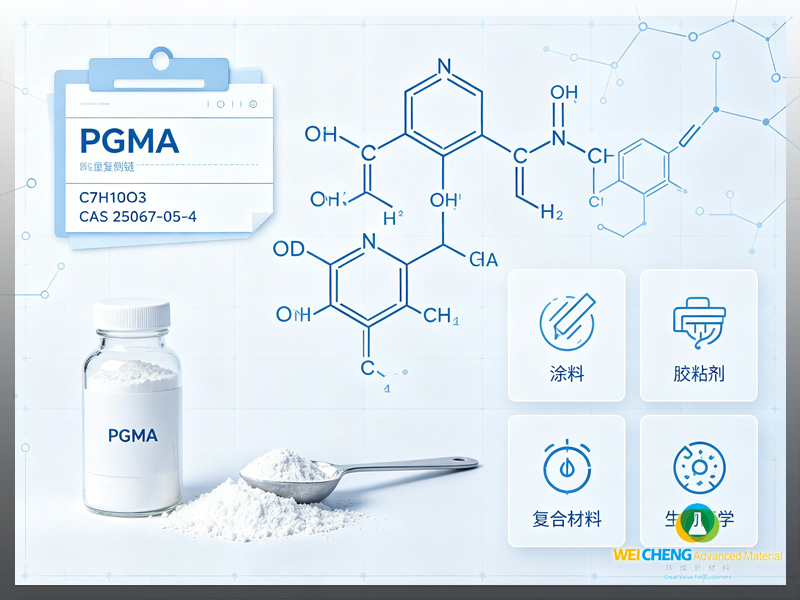
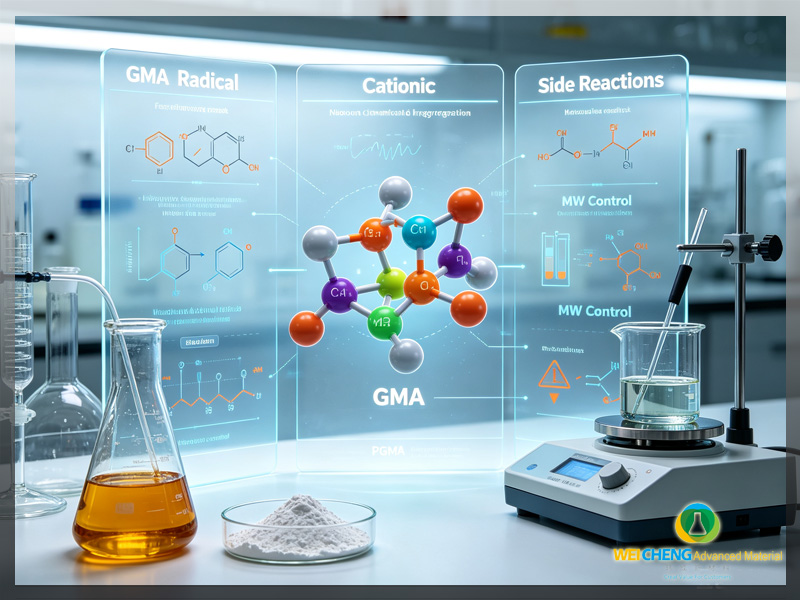
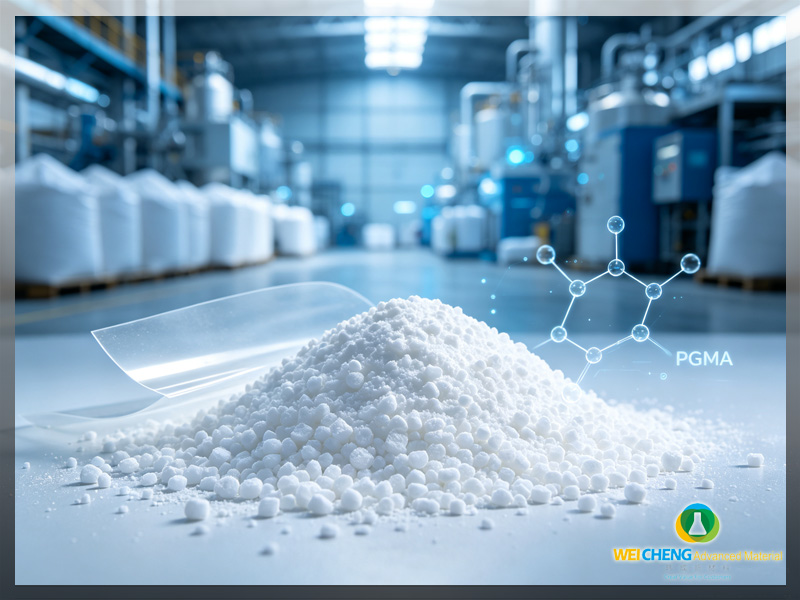
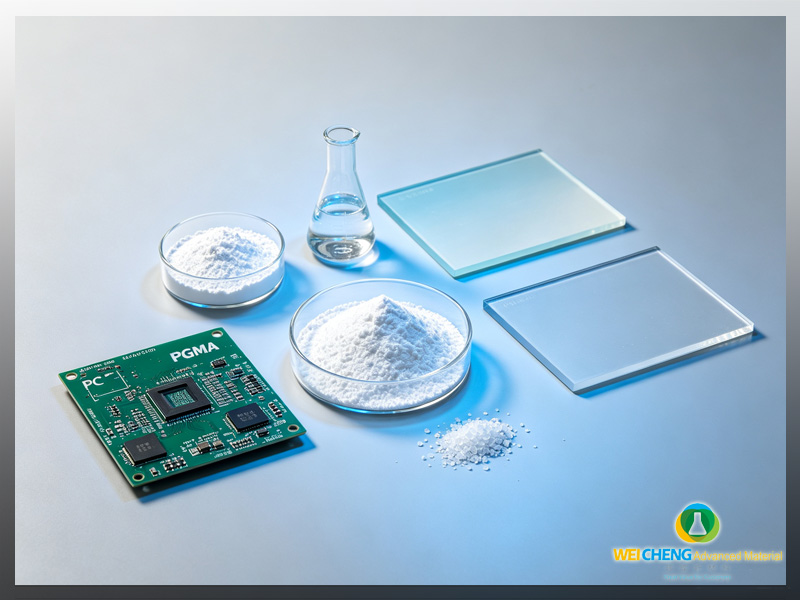
Poly(glycidyl methacrylate) (PGMA) is recognized as a versatile reactive platform polymer due to abundant pendant epoxy groups on its molecular chain. Beyond traditional industrial usage as chain extenders for biodegradable plastics and additives for PCB UV solder resist ink, continuous academic and industrial R&D drives innovative modification strategies.The most promising research direction is the synthesis of functional PGMA derivatives. Weicheng Advanced Material provides customizable PGMA raw materials (Mw 40,000–80,000) as the base polymer for further functional modification.
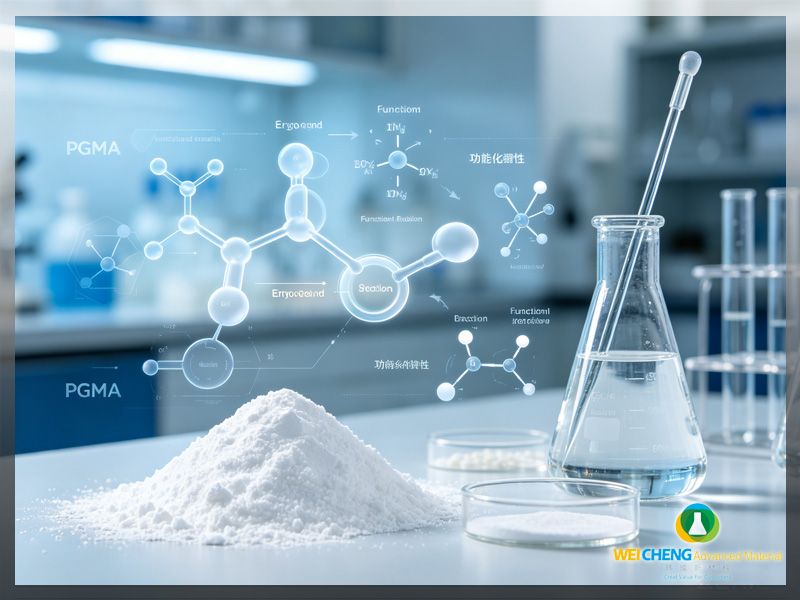
Functional PGMA Derivatives: Core Innovation Route
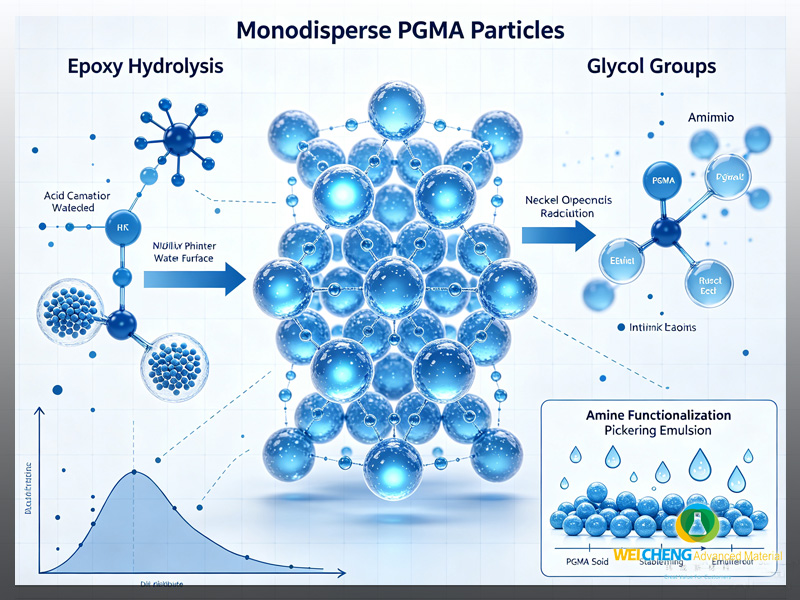
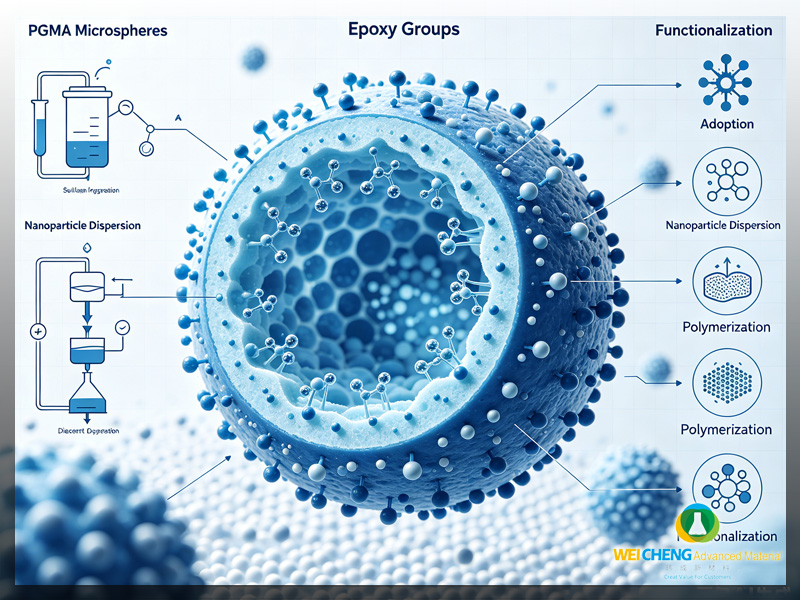
The glycidyl epoxy groups distributed along PGMA backbone are highly susceptible to ring-opening reactions with diverse nucleophiles, including amines, carboxylic acids, thiols and alcohols. This simple, efficient reaction pathway enables controllable grafting of target functional groups onto PGMA molecular chains, producing a broad range of PGMA derivatives with tailored performance.
Common modification routes for PGMA derivatives:
Epoxy-amine ring-opening reaction for amino-functionalized PGMA
Epoxy-carboxyl reaction for carboxylate grafted PGMA
Thiol-epoxy reaction to introduce sulfur-containing functional segments
Sequential multi-step grafting to construct dual/multi-functional PGMA materials
By adjusting the grafting density and types of functional side groups, researchers can precisely tune hydrophilicity/hydrophobicity, charge characteristics, stimuli responsiveness, biological activity and interfacial affinity of PGMA.
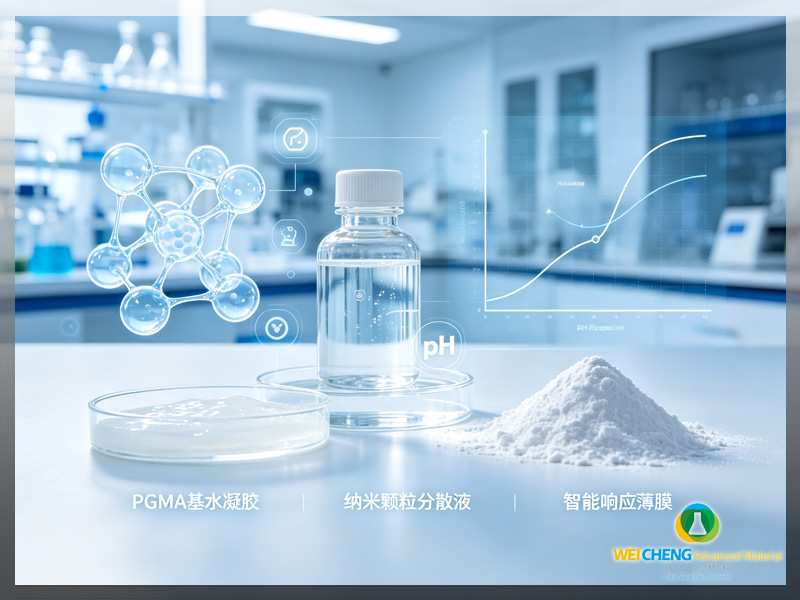
Typical Functional PGMA Derivatives & Emerging Application Directions
1. Stimuli-Responsive PGMA Derivatives
pH-responsive, thermo-responsive and ion-sensitive PGMA derivatives are fabricated by grafting hydrophilic/hydrophobic segments onto PGMA. These materials can self-assemble into nanoparticles, micelles or hydrogels.
Applications: Controlled drug release carriers, smart separation membranes, sensor substrates.
2. Antimicrobial PGMA Derivatives
Quaternary ammonium groups are introduced via epoxy ring-opening modification. The resulting PGMA derivatives exhibit broad-spectrum antibacterial and antifungal performance.
Applications: Antimicrobial coatings, biomedical device surface modification, food contact packaging materials.
3. Biomolecule-Immobilized PGMA Derivatives
PGMA reacts with protein, peptide and antibody molecules to form biocompatible functional carriers.
Applications: Biosensor platforms, enzyme immobilization supports, affinity chromatography packing materials.
4. Surface-Tailored PGMA Derivatives for Advanced Coatings
Fluorinated, silane-modified PGMA derivatives deliver superhydrophobic, anti-fouling and corrosion-resistant properties.
Applications: Marine anti-biofouling coatings, easy-clean optical coatings, metal anti-corrosion layers.
5. Compatibilizer PGMA Derivatives for Advanced Polymer Blends
Custom-grafted PGMA derivatives enhance interfacial compatibility between non-polar polymers, natural fibers and inorganic nanofillers.
Applications: High-performance biodegradable composite materials, engineering polymer alloys.
Advantages of PGMA as a Modification Platform
✅ Mild modification reaction conditions; no complicated catalyst system required
✅ High grafting controllability; adjustable functional group density
✅ Diverse available nucleophilic modifiers, flexible product design
✅ Good compatibility with most polymer matrixes
✅ Industrial raw PGMA is commercially available for scaling up derivative preparation
Outlook of PGMA Innovation
Traditional unmodified PGMA has achieved large-scale industrialization in coatings, inks and biodegradable plastics. The next development trend focuses on functional PGMA derivatives. With increasing demand for smart materials, biomedical carriers and high-performance eco-friendly coatings, modified PGMA materials will unlock more high-value application scenarios.
Weicheng Support for PGMA Derivative R&D
✅ Custom molecular weight PGMA base resin (Mw 40,000–80,000)
✅ Low residual monomer PGMA ideal for subsequent chemical modification
✅ Low-yellowing electronic grade for transparent functional coating research
✅ Stable batch supply, complete COA, TDS, MSDS documentation
✅ Technical consultation for polymer modification formulation
Contact Weicheng Advanced Material (Shandong) Co., Ltd to obtain PGMA samples for your derivative research.

 Home
Home Products
 News
News Call
Call