


Physical, Thermal, Mechanical, Chemical & Optical Properties of Poly(glycidyl methacrylate) PGMA
- 2026-08-04
- 85
- Weicheng Advanced Material (Shandong) Co., Ltd.
AI-assisted content. please verify.
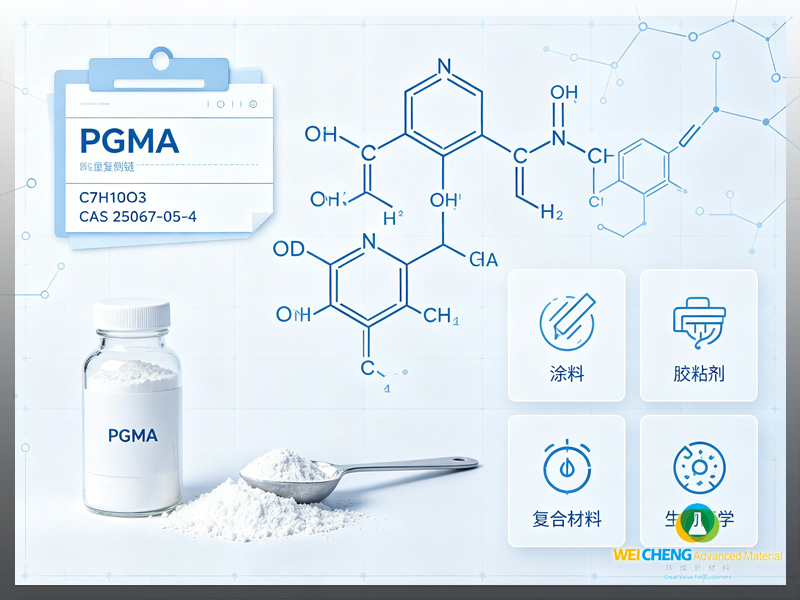
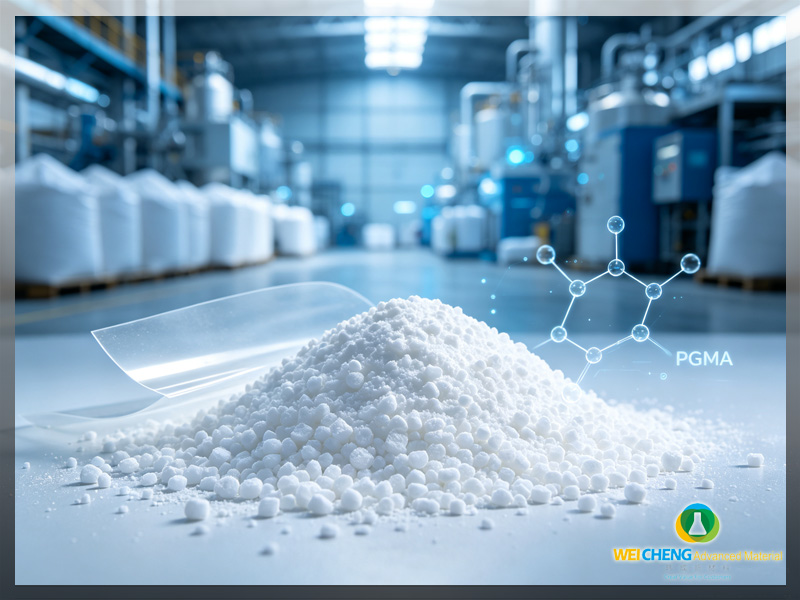
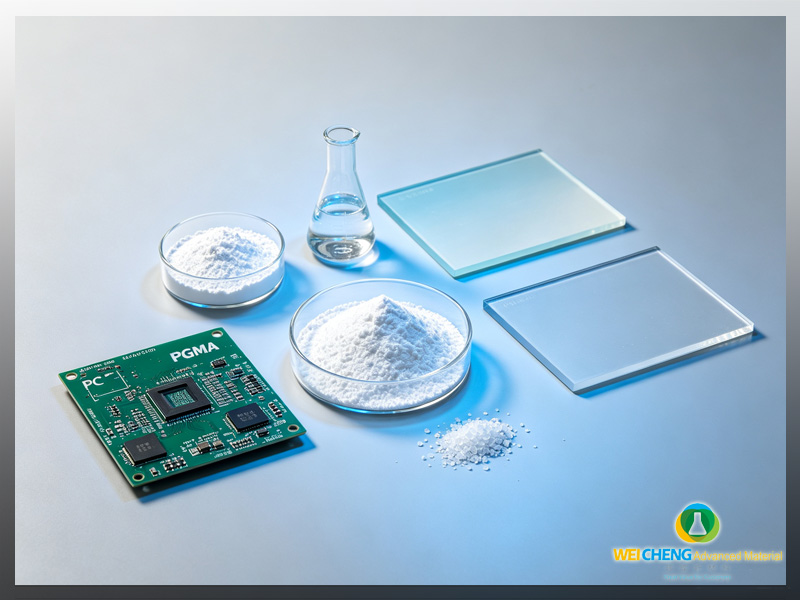
Poly(glycidyl methacrylate) (PGMA) is a functional reactive acrylic polymer bearing pendant glycidyl epoxy groups. Its adjustable molecular structure endows balanced thermal, mechanical, chemical and optical properties, supporting wide utilization in biodegradable plastics, PCB UV solder resist ink, coatings and functional modifiers.Weicheng Advanced Material (Shandong) Co., Ltd supplies customizable PGMA (Mw 40,000–80,000) with stable and controllable performance for global industrial customers.
1. Thermal Properties
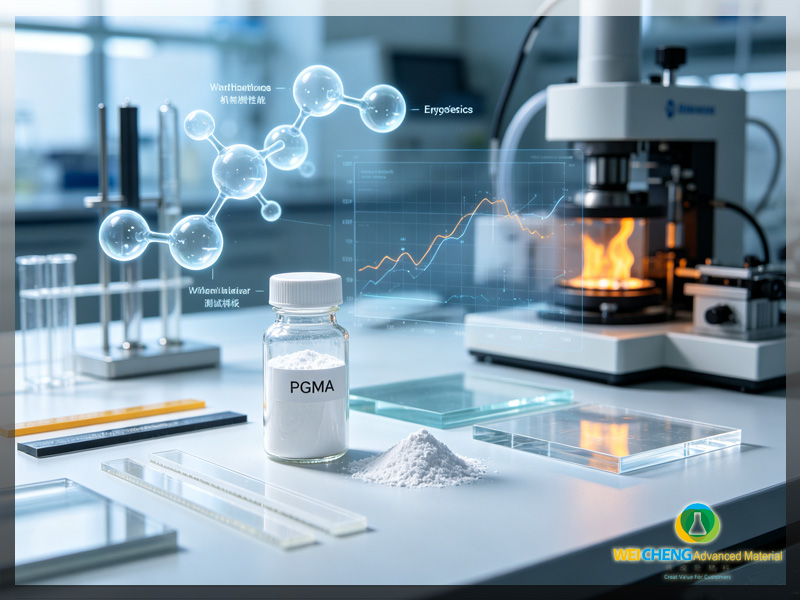
PGMA possesses favorable thermal stability. The glass transition temperature (Tg) varies significantly with molecular weight, polymerization tacticity and chain structure.Our commercial PGMA grade (Mw 40,000–80,000) shows Tg between 42 °C ~ 48 °C. Higher molecular weight variants can achieve Tg ranging up to 80–120°C.The thermal decomposition temperature of PGMA exceeds 250°C. Such thermal stability enables PGMA to withstand high-temperature melt extrusion, coating curing and reflow soldering processes without obvious thermal degradation.
2. Mechanical Properties
PGMA is a rigid polymer matrix with outstanding stiffness and mechanical strength.High molecular weight PGMA delivers tensile strength up to 70 MPa and Young’s modulus reaching 3.5 GPa.These mechanical characteristics grant excellent dimensional stability and anti-deformation capacity. When used as chain extender or coating modifier, PGMA effectively improves toughness, tensile performance and structural stability of PLA/PBAT blends and cured coating films.
3. Chemical Properties
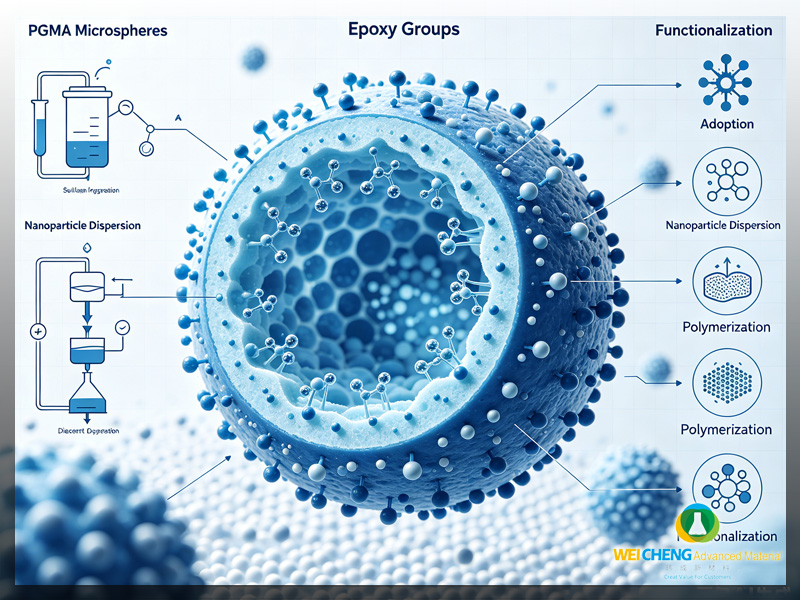
The pendant epoxy (oxirane) groups along PGMA molecular chains provide abundant reactive sites for ring-opening reaction, graft modification and crosslinking.Epoxy groups can readily react with carboxyl (-COOH), hydroxyl (-OH) and amine (-NH₂) groups. This feature makes PGMA a perfect reactive modifier for polymer blending and dual-curing coating systems.
PGMA demonstrates moderate resistance to dilute acids, alkalis and multiple organic solvents. It is soluble in THF, acetone, DMF and MEK, while insoluble in water and aliphatic hydrocarbons. Optimized low-yellowing electronic-grade PGMA features ultra-low hydrolyzable chlorine and residual monomer, minimizing side reactions under harsh service conditions.
4. Optical Properties
PGMA features good intrinsic optical transparency. Its refractive index falls within 1.51 ~ 1.54 (wavelength dependent).Combined with thermal stability and crosslinking adjustability, PGMA can be applied in transparent coatings, photoresists and optical functional material systems. Our low-yellowing PGMA grade maintains stable color after long-term thermal aging, especially suitable for white PCB solder resist and transparent electronic protective coatings.
Summary of Performance Advantages
Tunable thermal performance matched with different processing techniques
High rigidity and mechanical strength for dimension retention
Reactive epoxy groups for flexible crosslinking & formulation design
Good transparency; low-yellowing grade available for high-end optical & electronic applications
Weicheng PGMA Advantage
✅ Customizable molecular weight Mw 40,000–80,000
✅ Stable thermal performance, low hydrolyzable chlorine electronic grade
✅ Low residual monomer, excellent anti-yellowing property
✅ Complete test reports including GPC, DSC and epoxy equivalent analysis
✅ ISO certified, EU REACH compliant
✅ COA, TDS, MSDS provided for each shipment
Contact Weicheng Advanced Material (Shandong) Co., Ltd for PGMA samples and detailed property test data.

 Home
Home Products
 News
News Call
Call