


Applications of Poly(glycidyl methacrylate) Mw:40,000–80,000 g/mol
- 2026-07-15
- 127
- Weicheng Advanced Material (Shandong) Co., Ltd.
AI-assisted content. please verify.
Applications of Poly(glycidyl methacrylate) (PGMA), Mw = 40,000–80,000 g/mol
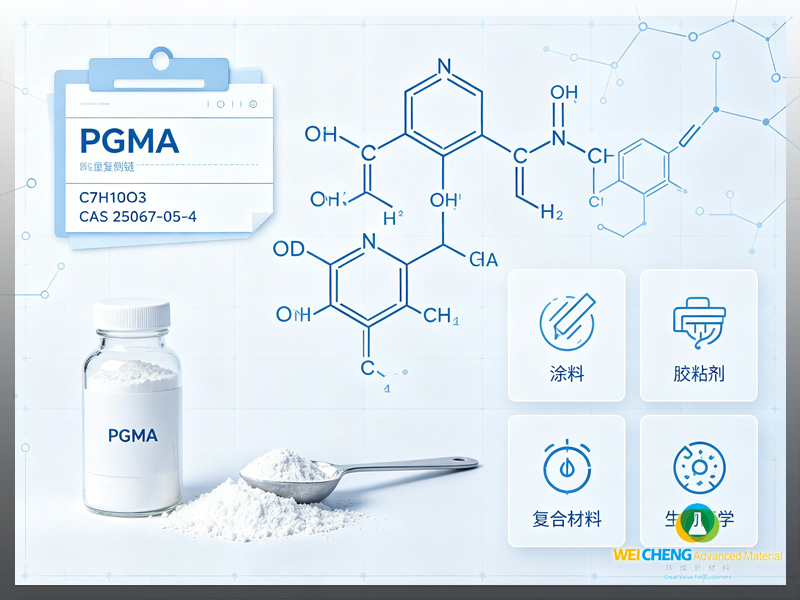
PGMA (Mw 40,000–80,000) is a reactive amorphous acrylic polymer with high-activity pendant epoxy groups. Main applications include:
Curing modifier & adhesion promoter for powder coatings, solvent-based primers and printing inks;
Interfacial compatibilizer for polyolefin/polyester/polyamide alloy and glass fiber reinforced composites;
Performance enhancer for industrial adhesives and hot melt adhesives;
Binder for ceramic/metal 3D printing feedstock and electronic insulating coatings;
Precursor for functional adsorption microspheres and bioconjugation carriers.This molecular weight grade features balanced melt viscosity, good film-forming property and low migration, suitable for high-temperature processing formulations within 120–210 °C.
Core Advantage of This Molecular Weight Grade
PGMA with Mw 40–80 kDa balances moderate melt fluidity, excellent film-forming performance, stable epoxy reactivity and low migration risk. Compared with low-MW PGMA (<20 kDa), it avoids blooming and volatile issues; compared with ultra-high-MW PGMA (>100 kDa), it delivers better solvent solubility and processing operability. The pendant oxirane (epoxy) groups enable mild crosslinking with carboxyl, amine, thiol and hydroxyl groups, serving as a universal reactive modifier across coatings, adhesives, polymer composites and functional materials.
1. Coatings Industry (Largest Commercial Application)
1.1 Thermosetting Powder Coatings
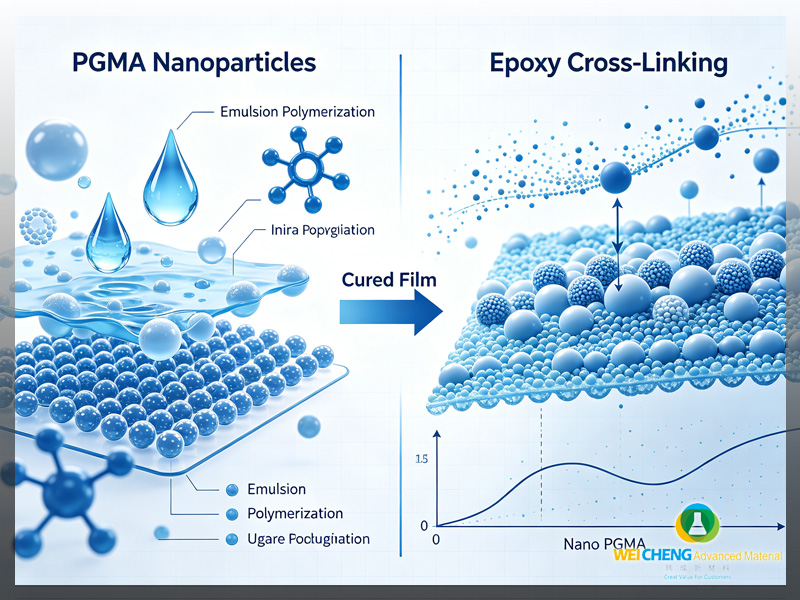
Acts as internal curing agent for carboxyl polyester powder coatings. Epoxy rings react with polyester carboxylic acid groups during baking (160–200 °C) to build crosslinked networks, improving coating hardness, gloss, solvent resistance and anti-corrosion performance on metal substrates (steel, aluminum, hardware).
Optimizes leveling and reduces pinholes; avoids yellowing at curing temperature.
1.2 Solvent-Borne Functional Coatings & Primer Additives
Metal anti-corrosion primer: Enhances adhesion between coating film and steel/galvanized sheets; improves salt spray resistance.
Plastic coating adhesion promoter: Boosts bonding force on PP, PE, PET, ABS and PC for topcoat/ink layers.
Clear protective coating for glass, aluminum alloy and electronic parts; forms rigid, transparent scratch-resistant films.
1.3 Ink & Varnish Modifier
Added to polyurethane, acrylic printing inks to increase adhesion to low-surface-energy plastic films; improves scratch resistance and chemical resistance of printed layers.
2. Reactive Compatibilizer for Polymer Blends & Engineering Plastics
Compatibilize immiscible polymer pairs: Polyolefin (PP/PE/EVA) + PET/PBT/PA/PC. Epoxy groups react with terminal carboxyl/amino groups of polyesters and polyamides to form interfacial chemical bonds, refining phase dispersion, raising impact strength and tensile modulus, and reducing delamination.
Used in glass fiber-reinforced plastics: Improves interface bonding between resin matrix and glass fiber, enhances composite mechanical performance and moisture resistance.
Additive for color masterbatch: Improves pigment dispersion and carrier resin compatibility, preventing pigment agglomeration.
3. Adhesives & Hot Melt Modifiers
3.1 Structural & Industrial Adhesives
Modifier for two-component epoxy, acrylic and polyurethane adhesives: Introduces extra crosslink sites to elevate bonding strength on metal, plastic and composite substrates; enhances heat and hydrolysis resistance of cured adhesive layers.
Primer for metal-rubber bonding: PGMA thin film forms chemical bridge between steel and EPDM/NBR rubber to eliminate interface peeling.
3.2 Hot Melt Adhesive (HMA) Additive
Blended with EVA, polyolefin hot melts to upgrade adhesion to hard-to-stick substrates (metal, nylon, polar plastics); improves thermal creep resistance of hot melt joints.
4. Composite & Thermoplastic Processing Auxiliary
Binder for ceramic/metal powder 3D printing feedstock: Dissolves in ketone/ester solvents to homogenize inorganic powder suspension; decomposes cleanly during sintering without residual carbon pollution.
Surface grafting medium for natural fiber (cotton, hemp, pineapple fiber): Epoxy rings graft onto fiber hydroxyl groups to improve compatibility with plastic matrix for bio-composite laminates.
5. Electronic & Microelectronic Materials
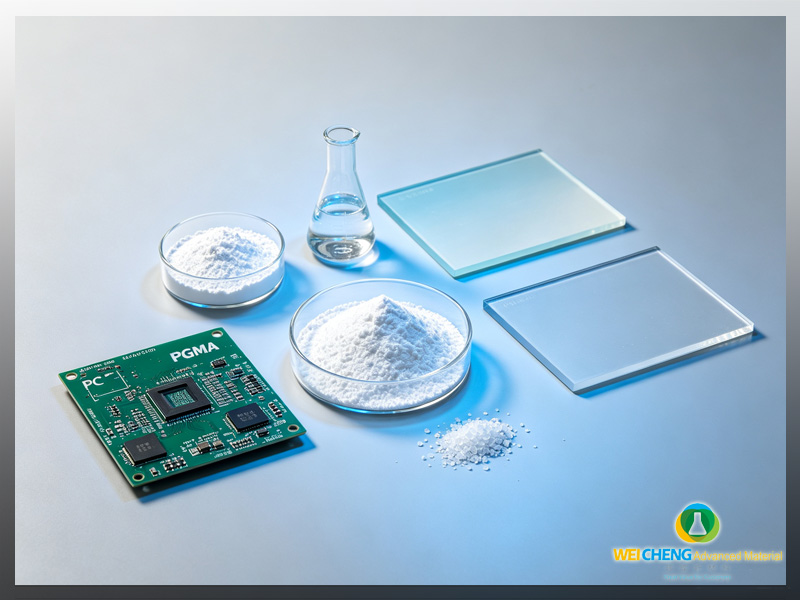
Dielectric coating for electronic components: Forms insulating, heat-resistant thin film on circuit boards, chip substrates and wiring harnesses.
Adhesion interlayer for photoresist and semiconductor wafer coating; improves binding between polymer photoresist and silicon/metal wafer surfaces.
Encapsulation auxiliary for low-voltage electronic parts, boosting moisture and chemical corrosion resistance.
6. Functional Adsorbent & Separation Materials (Lab & Fine Chemical Field)
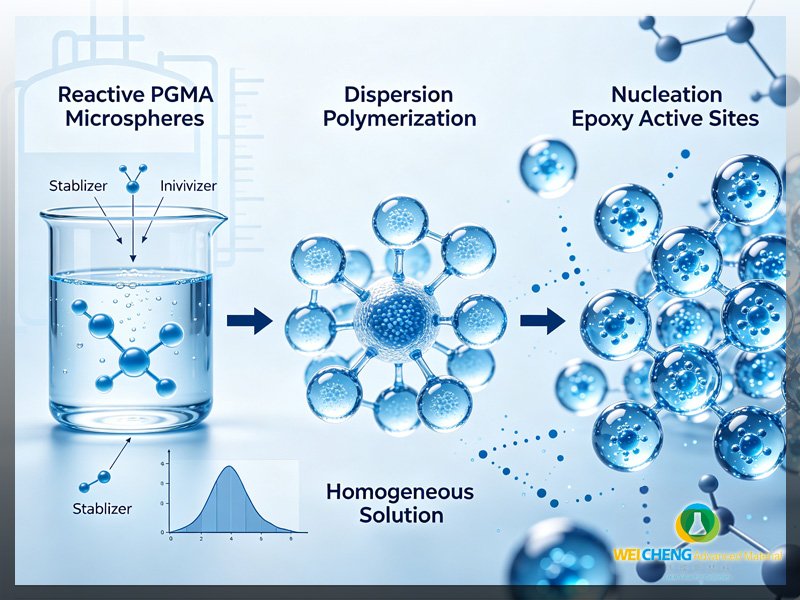
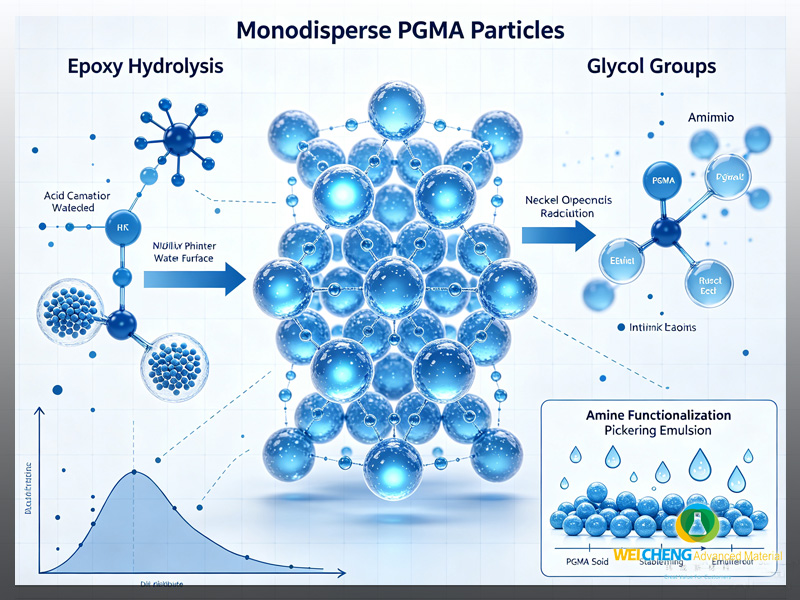
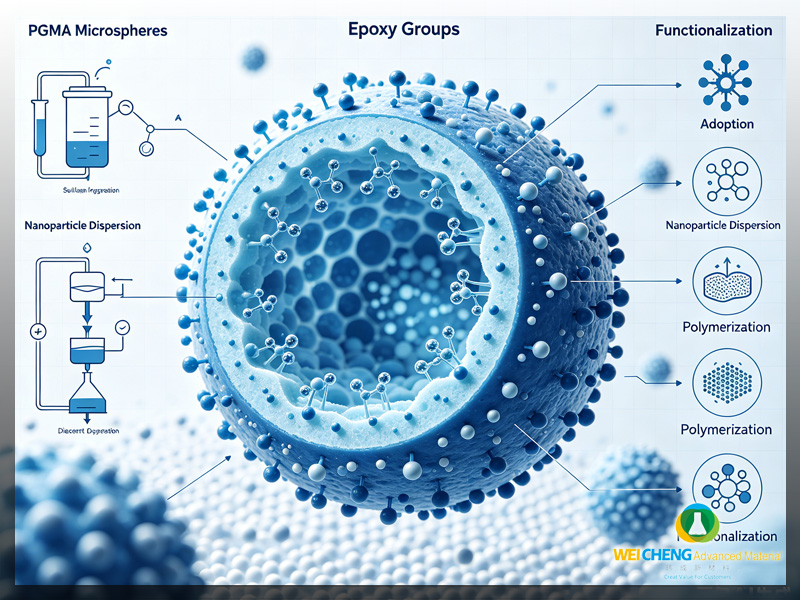
Raw material for porous PGMA microspheres: Epoxy groups serve as active grafting sites to immobilize amine, thiol and metal chelating ligands. Functionalized microspheres are applied for selective adsorption of heavy metal ions (Au, U, Cu), protein enrichment and chromatographic separation packing.
Solid-phase extraction carrier for biochemical analysis and wastewater heavy metal recovery.
7. Biomedical & Bioconjugate Materials (Purified Grade Only)
Biocompatible polymer scaffold precursor for tissue engineering; epoxy groups conjugate with amino groups of proteins, peptides and antibodies for drug delivery carriers and biosensor surface modification.
Carrier for immobilized enzymes; mild epoxy ring-opening reaction retains biological activity of biomolecules.

 Home
Home Products
 News
News Call
Call