


Poly(glycidyl methacrylate) Structural Features
- 2026-07-10
- 135
- Weicheng Advanced Material (Shandong) Co., Ltd.
AI-assisted content. please verify.
Poly(glycidyl methacrylate) — Structural Features
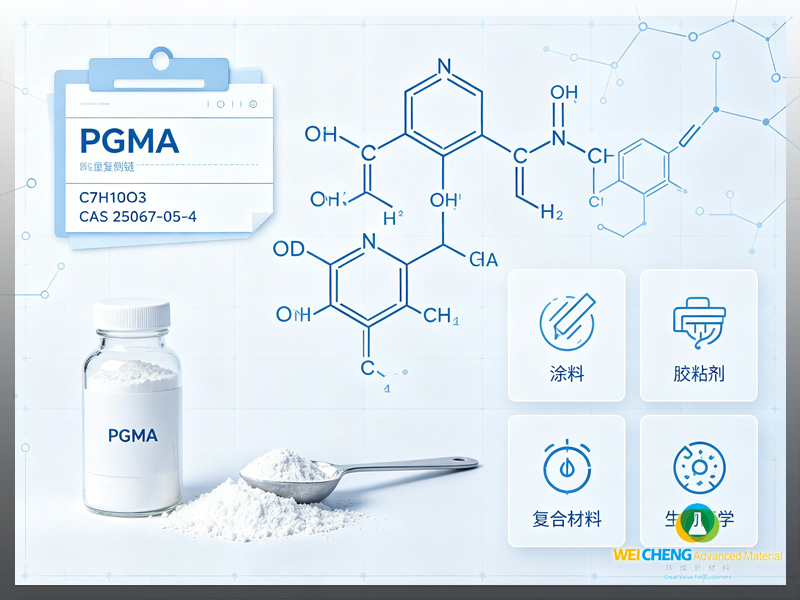
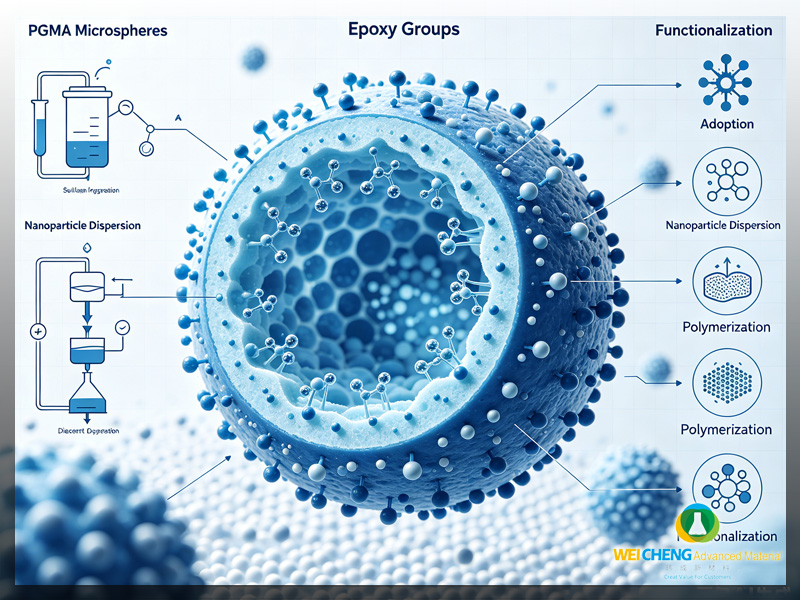
PGMA possesses a rigid polymethacrylate backbone with pendant reactive oxirane epoxy rings on every repeat unit. The methyl-substituted carbon main chain guarantees high thermal stability and mechanical rigidity, while terminal strained epoxy groups provide abundant reactive sites for amine, acid and thiol ring-opening modification. Tunable molecular weight and copolymer composition allow customized epoxy content, solubility and crosslink performance for coatings, bioseparation and adsorbent applications.

1. Main Polymer Backbone
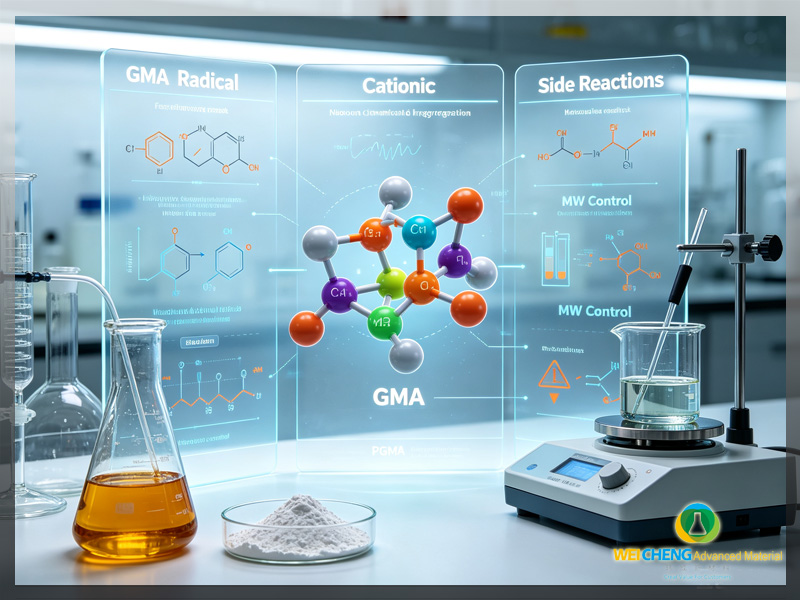
PGMA is a linear acrylic polymer derived from glycidyl methacrylate (GMA) monomer, with a saturated polymethacrylate carbon main chain:
Repeating unit backbone: -[-CH₂-C(CH₃)(COO-R)-]-ₙ
Methyl group (-CH₃) attaches to the tertiary carbon of each repeating unit, which raises the glass transition temperature (Tg) and improves polymer rigidity, compared with polyacrylate without methyl substitution.
The carbon-carbon main chain delivers excellent thermal stability and anti-oxidation performance at moderate temperatures.
2. Ester Linkage Side Chain Core
Every repeat unit contains a carboxylate ester group (-COO-) connecting the backbone to the reactive side arm:
Ester bonds endow good compatibility with other acrylic resins, polyurethanes, and coating binders.
Moderate polarity improves adhesion to polar substrates (metal, glass, plastic).
3. Signature Reactive Epoxy (Oxirane) Pendant Group (Most Distinct Feature)
The terminal functional group is a three-membered oxirane/epoxy ring attached via an ethyl linker (-CH₂-CH₂-) to the ester oxygen:
High ring strain of epoxy ringThe compact triangular epoxy ring carries high chemical activity, enabling ring-opening reactions under mild heating or with catalysts.
Versatile nucleophilic ring-opening sitesThe epoxy group readily reacts with multiple common functional groups for post-modification:
Primary/secondary amines (-NH₂, -NHR)
Carboxylic acids (-COOH)
Thiols (-SH)
Hydroxyl groups (-OH)
Uniform functional densityEach repeating unit carries one epoxy group, so epoxy content can be precisely controlled by molecular weight and copolymer ratio.
4. Adjustable Molecular Architecture
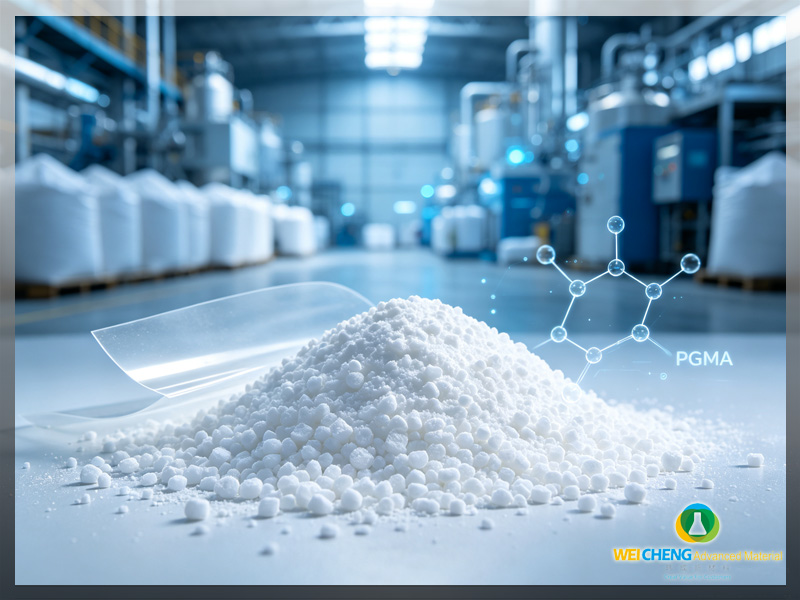
Homopolymer PGMA: Fully epoxy-functionalized linear chains, supplied as white fine powder in industrial grades.
Copolymerized PGMA: Copolymerize with MMA, styrene, EGDMA, etc. to tune epoxy density, crosslinkability, hardness, and solubility.
Controlled polymerization (ATRP/RAFT) produces narrow molecular weight distribution PGMA for lab & high-end biomedical use.
5. Solubility Related to Structure
Non-polar carbon backbone + polar ester & epoxy groups balance solubility: soluble in THF, chloroform, acetone, but insoluble in water and aliphatic alkanes.
Uncrosslinked linear PGMA dissolves in common organic solvents; crosslinked PGMA microspheres become insoluble adsorbent supports.
- Previous:没有了!
- Next:Poly(glycidyl methacrylate) (PGMA) Product Advantages

 Home
Home Products
 News
News Call
Call