


Why PGMA (Poly(glycidyl methacrylate)) Works for Biodegradable PLA/PBAT Chain Extender
- 2026-08-04
- 85
- Weicheng Advanced Material (Shandong) Co., Ltd.
AI-assisted content. please verify.
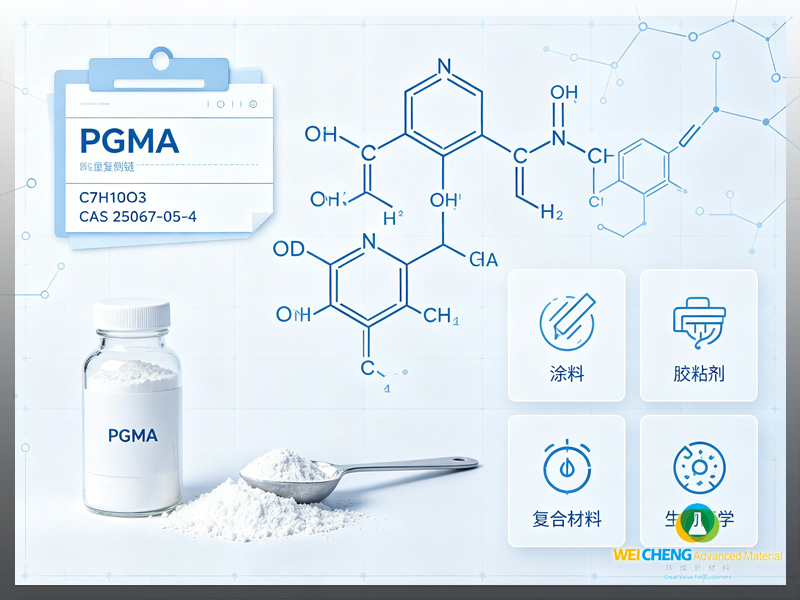
Global demand for biodegradable plastics such as PLA and PBAT continues to surge as countries implement plastic restriction policies. However, inherent drawbacks limit their processing and application performance: molecular chain degradation during melt extrusion, insufficient melt strength, poor toughness and low heat resistance.Poly(glycidyl methacrylate) (PGMA) has become one of the most popular reactive chain extenders to solve these pain points. Weicheng Advanced Material (Shandong) Co., Ltd supplies high-molecular-weight PGMA (Mw 40,000–80,000) specially developed for PLA/PBAT modification.
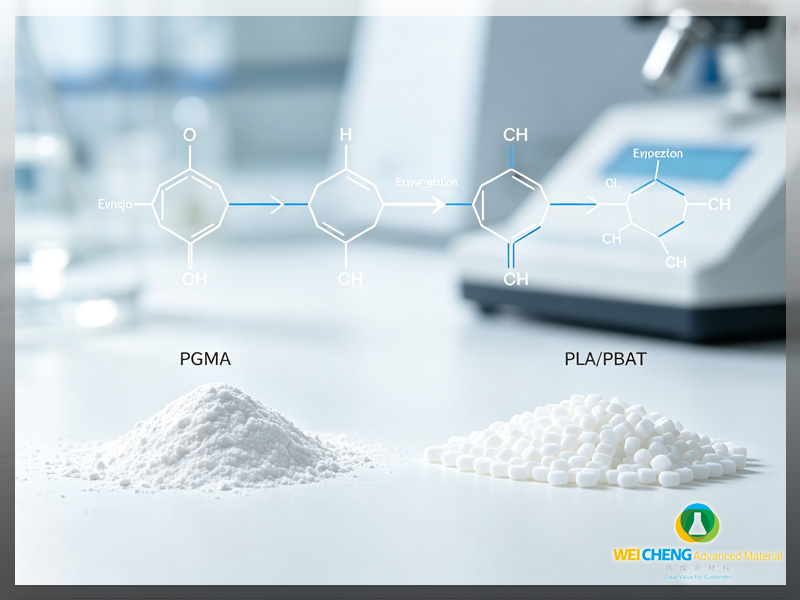
1. Core Reaction Mechanism – How PGMA Chains Up PLA & PBAT
PLA and PBAT are aliphatic polyesters. After hydrolysis or thermal shearing during extrusion, polymer molecular chains break and produce terminal -COOH (carboxyl groups) and -OH (hydroxyl groups).
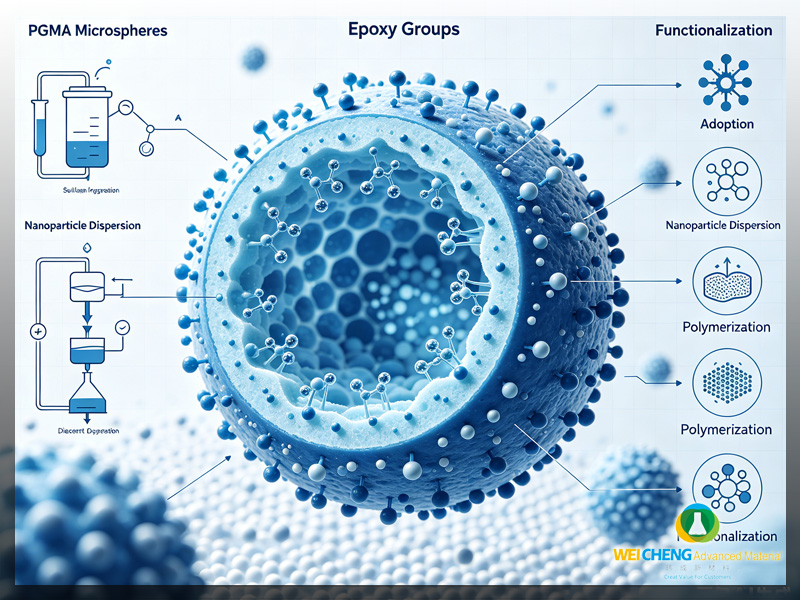
PGMA is an acrylic polymer grafted with abundant pendant glycidyl epoxy groups.During melt compounding at processing temperature:
Epoxy groups on PGMA react with terminal carboxyl groups of PLA/PBAT (main reaction)
Epoxy groups also react with terminal hydroxyl groupsShort broken polyester chains are linked together via PGMA molecular bridges.Result: Increased average molecular weight, improved melt viscosity and suppressed thermal degradation.
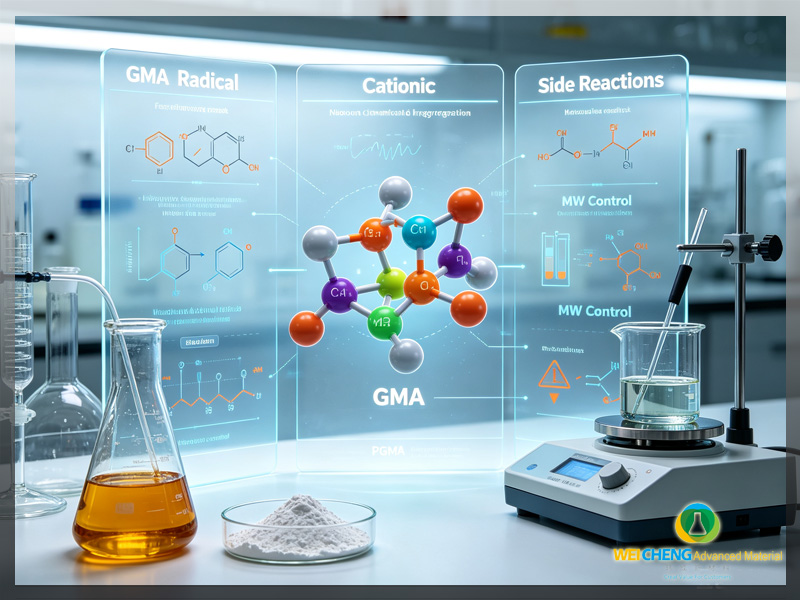
Reaction Formula Summary:Epoxy group (PGMA) + -COOH / -OH (PLA/PBAT) → Covalent bonding, long polymer chain reconstruction
2. Key Advantages of PGMA as PLA/PBAT Chain Extender
2.1 High Reaction Efficiency
Each PGMA molecular chain carries multiple epoxy functional sites. One PGMA molecule can connect multiple fractured PLA/PBAT segments simultaneously, achieving obvious chain extension effect with low addition dosage (typically 1–5 wt%).
2.2 Excellent Compatibility with PLA/PBAT
PGMA has similar polar characteristics to polyester-based PLA and PBAT. It can be uniformly dispersed inside the polymer matrix without obvious phase separation, avoiding transparency loss and mechanical property decline.
2.3 Improve Processing Performance
Boost melt strength, solve film blowing foaming instability
Reduce melt flow index (MFI), adapt to blow molding, extrusion, thermoforming
Inhibit molecular degradation under high-temperature shearing
2.4 Promote Mechanical Properties
After chain extension:
✅ Higher tensile strength
✅ Improved elongation at break
✅ Better impact toughness
✅ Enhanced thermal deformation resistance
2.5 Low Yellowing & Good Thermal Stability
Our high-purity PGMA features low residual GMA monomer and low hydrolyzable chlorine. It avoids discoloration during high-temperature processing, suitable for transparent biodegradable film, injection disposable products.
2.6 Stable Storage & Easy Handling
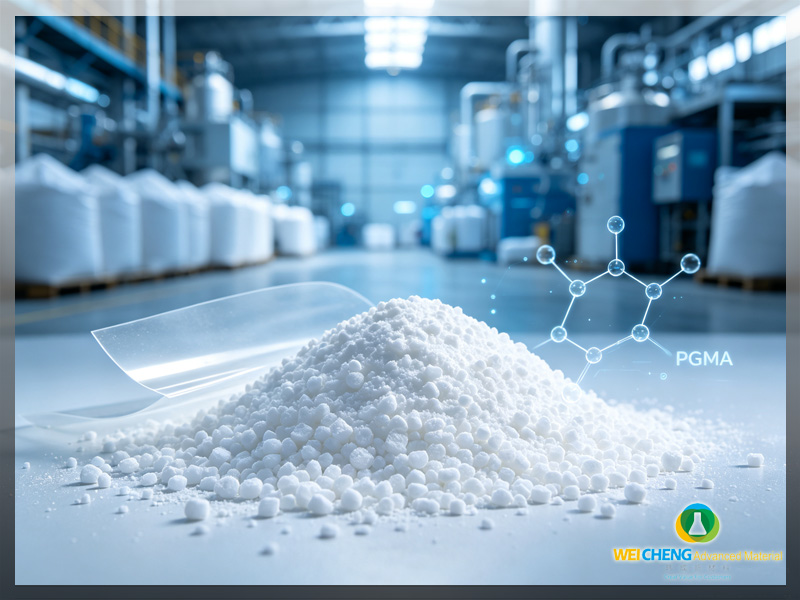
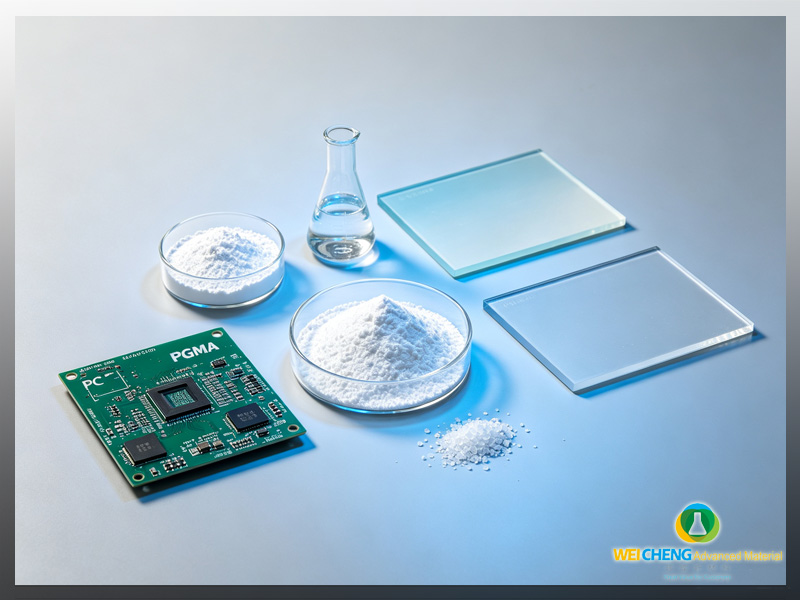
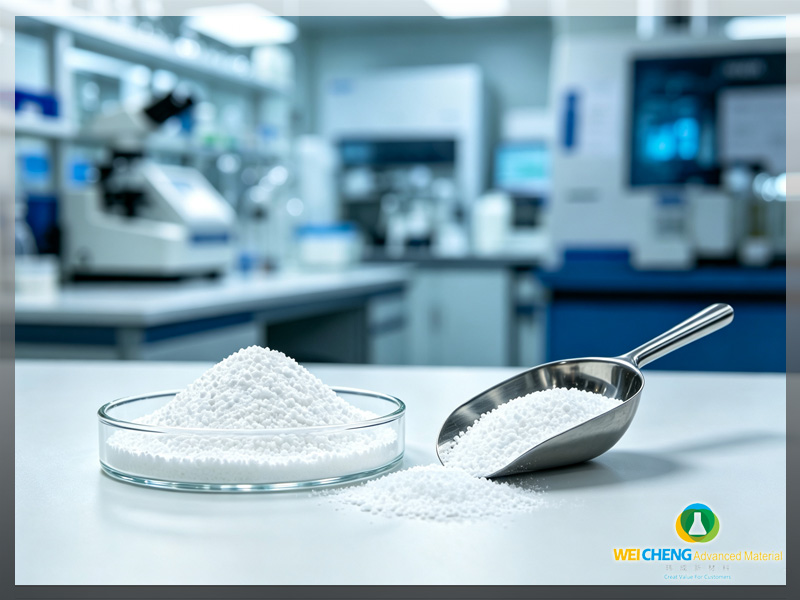
Supplied as free-flowing white powder, convenient for feeding during twin-screw extrusion. No pre-treatment required before compounding.
3. Comparison: PGMA VS Other Common Chain Extenders
Many manufacturers use bisphenol epoxy chain extenders or carbodiimide additives. PGMA shows unique strengths:
No toxic small molecule release during reaction
Better long-term biodegradability of final PLA/PBAT blends
Wider processing temperature window
Lower tendency of crosslinking and gelation
Balanced cost performance for mass production
4. Typical Application Scenarios for PGMA Modified PLA/PBAT
Biodegradable shopping bags, mulch film
Disposable food packaging, lunch boxes, cutlery
3D printing biodegradable filaments
Compostable injection molding consumer goods
Textile biodegradable fiber
5. Recommended Usage Guidance
Recommended dosage: 1 ~ 5 wt% based on total PLA/PBAT resinProcessing temperature range: 160 ~ 210°CSuggestion: Twin-screw extruder uniform mixing; sufficient residence time to guarantee chain extension reaction.
Why Choose Weicheng PGMA for PLA/PBAT Modification
✅ Custom high molecular weight PGMA: Mw 40,000–80,000, optimized for chain extension
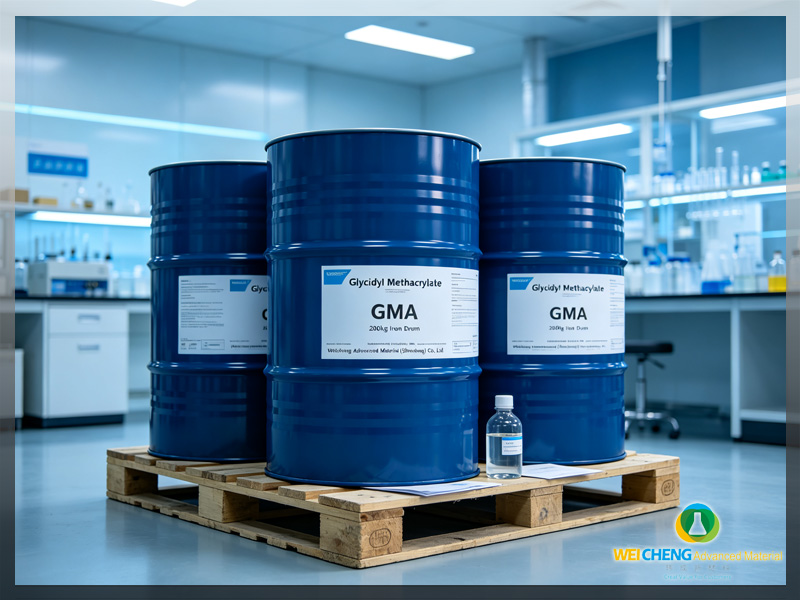
✅ Vertical supply chain: Raw material GMA self-produced (99.9% purity, annual capacity 6000 tons)
✅ Strict control of residual monomer ≤0.3%, low chroma, low yellowing
✅ Stable batch consistency, complete COA, TDS, MSDS documents
✅ ISO certified factory, EU REACH compliant
✅ Professional technical team provides formulation support
Contact Weicheng Advanced Material (Shandong) Co., Ltd to get PGMA samples for your PLA/PBAT lab testing.

 Home
Home Products
 News
News Call
Call